
Reviewed personally by Dr. Sunkara · Written for Carpal Tunnel Syndrome Treatment in Hyderabad · Updated October 2026
Quick Answer
Carpal tunnel syndrome treatment in Hyderabad ranges from wrist splinting and steroid injections for mild cases to carpal tunnel release surgery when numbness or weakness in the hand persists or shows up as moderate to severe on a nerve conduction study. The goal is relieving pressure on the median nerve at the wrist, not surgery as a default first step.

Many patients arrive braced for an operation, assuming treatment always means surgery. It usually doesn't. A wrist splint worn at night, fewer repetitive hand movements at work, and sometimes a steroid injection settle mild symptoms before surgery ever comes up.
Surgery enters the picture only when numbness or weakness doesn't let up, or a nerve conduction study confirms moderate to severe compression. Not every problem needs a surgery. And putting off that test out of worry usually causes more stress than the result does.
People usually start considering carpal tunnel syndrome treatment in Hyderabad after one of these patterns shows up and doesn't go away on its own.
01
A hand exam and nerve conduction study confirm the diagnosis and show how severe the nerve compression is before any procedure is planned.
02
Open or endoscopic release cuts the ligament pressing on the median nerve, done under local anesthesia as a same-day procedure in most cases.
03
A follow-up visit a week or two later checks wound healing and nerve recovery, and confirms whether grip-strengthening exercises or physiotherapy would help regain strength.
Nervous about what the day of surgery looks like? It's simpler than most expect, a short, local anesthesia day-care procedure.
01
A rigid wrist splint worn at night keeps the wrist straight, taking pressure off the median nerve, and it's often the first thing tried for mild symptoms.
02
A corticosteroid injection into the carpal tunnel reduces swelling around the nerve and can ease symptoms for weeks to months, buying time before deciding whether surgery is needed. Dr. Sunkara provides both splinting and this injection himself.
03
A single incision across the palm lets Dr. Sunkara cut the ligament pressing on the median nerve directly, under local anesthesia, in a procedure that usually takes under thirty minutes. His preferred approach, since results are typically better.
04
A camera and small instruments are passed through one or two small incisions to release the ligament with less visible scarring, an approach not every surgeon offers for every case.
01
Carpal tunnel release in Hyderabad is almost always a day-care procedure. Most patients go home within a few hours, with the hand bandaged and elevated.
02
Mild soreness and swelling are normal. Light use of the fingers for eating or dressing is fine, though the wrist stays protected in a dressing.
03
Stitches come out and most people are back to typing, driving and light daily tasks, though heavier gripping is still eased in gradually.
04
Grip and pinch strength keep improving through this window, and most patients are back to unrestricted hand use by the end of it.
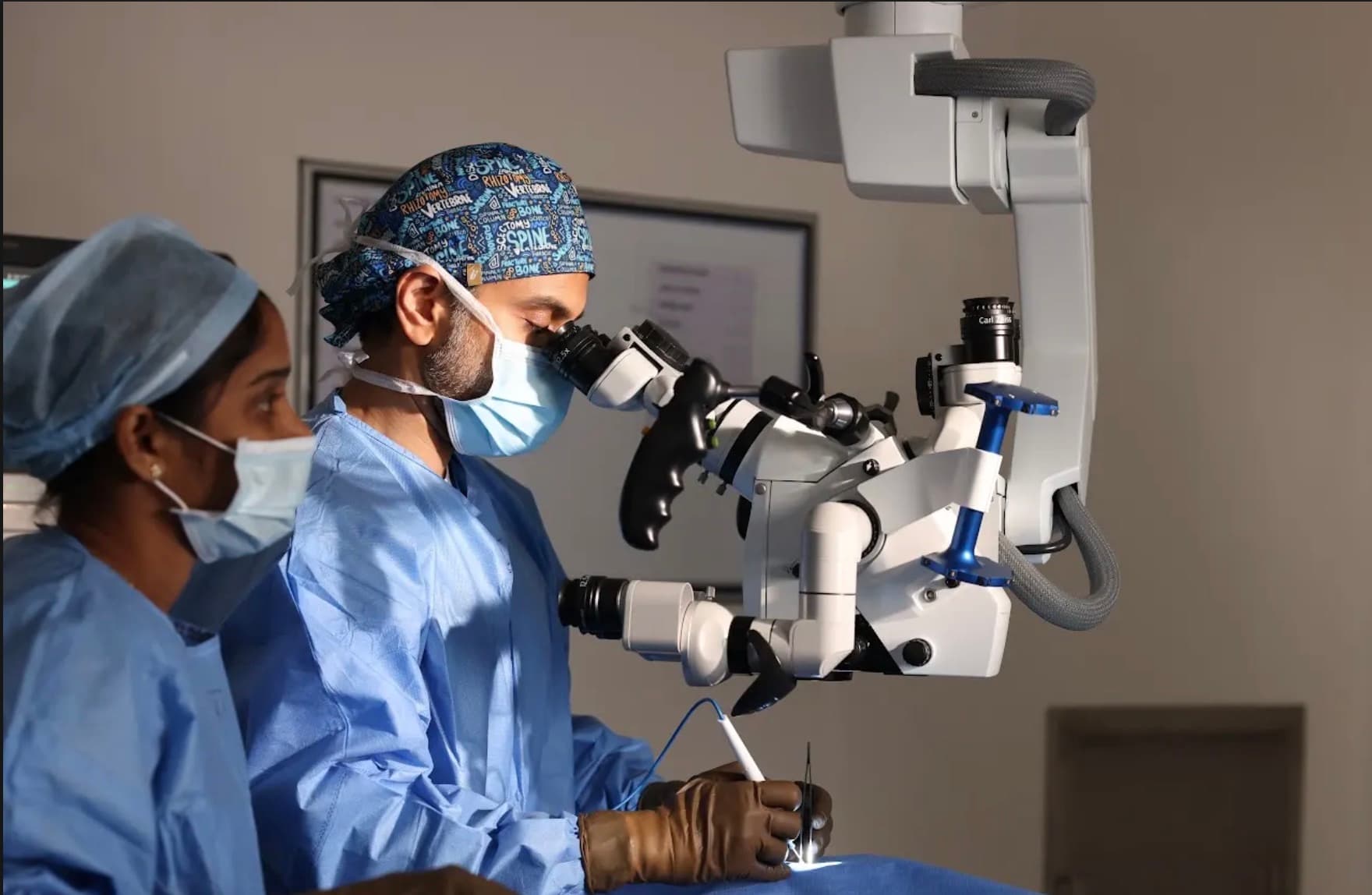
Carpal tunnel release has a reliable outcome profile in hand surgery once the diagnosis is confirmed.
Every carpal tunnel syndrome treatment in Hyderabad carries some risk, though serious complications after release surgery are uncommon.
What The Risks Include
There's no single ranking for this. Look for a surgeon who treats carpal tunnel regularly, explains both open and endoscopic release, and is honest about whether you need surgery.
Whether it's splints, an injection, or carpal tunnel release surgery, Dr. Sunkara reviews your symptoms and nerve conduction study personally before recommending a next step.

Written & reviewed by Dr. Raveesh Sunkara, Senior Consultant Neurosurgeon & Spine Surgeon · Last updated October 2026 · Next review due April 2027