
Reviewed personally by Dr. Sunkara · Written for Pituitary Tumour Surgery in Hyderabad · Updated October 2026
Quick Answer
Pituitary tumour surgery in Hyderabad is usually performed through the nose, using an endoscopic endonasal (transsphenoidal) approach that reaches the gland without an external incision. An open, transcranial approach through the skull is reserved for the few tumours that extend beyond the nasal route's reach. Not every pituitary tumour needs surgery: some small, non-functioning ones are simply watched, and prolactinomas often respond to medicine first.
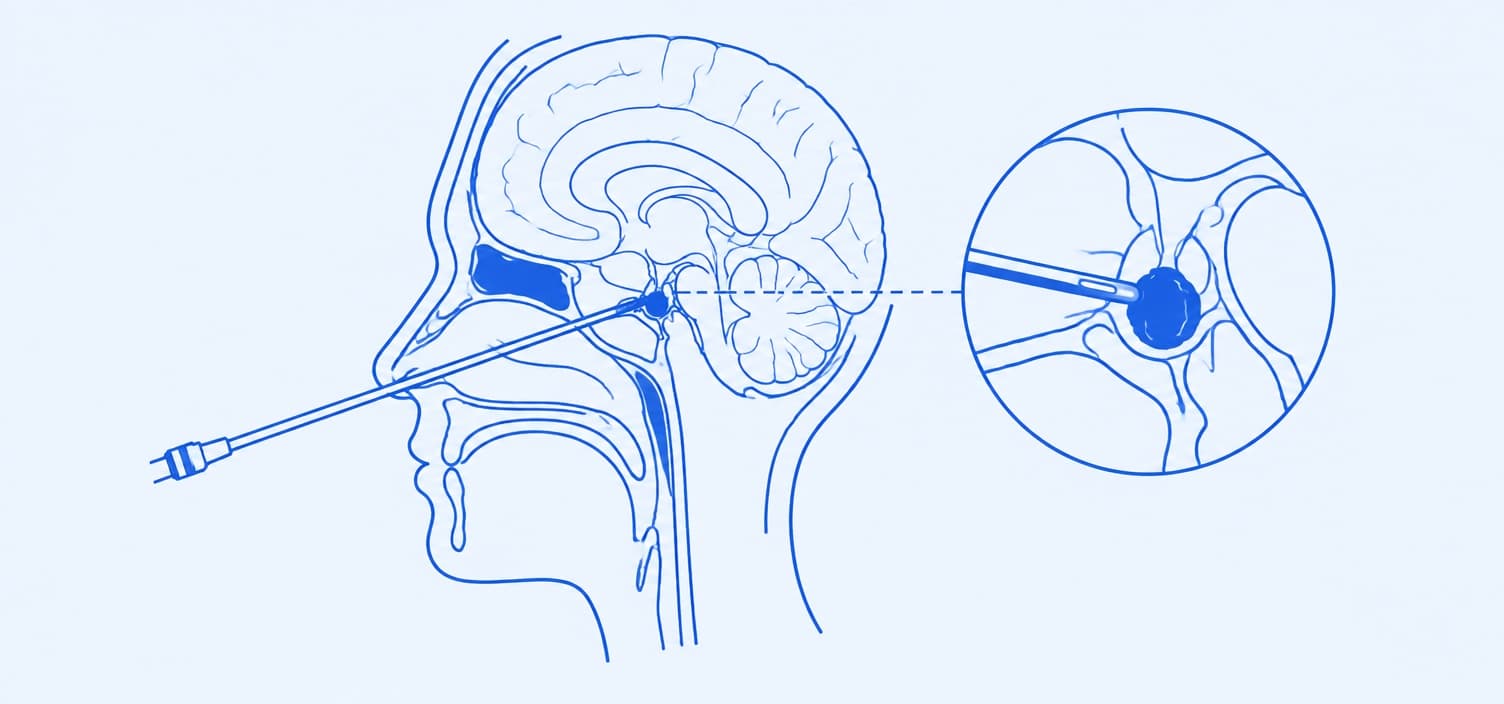
Pituitary tumour surgery rarely means a long operation or a visible scar. The gland sits just behind the nose, so most tumours are reached that way, not through the skull.
One recent patient was a child with a growing appetite and weight gain his parents assumed was just a growth spurt. Regular headaches and vision disturbances went unnoticed by local doctors in his hometown, until a sudden loss of consciousness revealed a large tumour with internal bleeding. His surgery was successful. Surgery is one option on the table, not the default.
Surgery gets considered once imaging and blood tests show which type of pituitary tumour this is, how it's behaving, and whether it's affecting vision or hormones.
01
Imaging and hormone blood tests confirm the tumour's type and size, and Dr. Sunkara maps whether the nasal route alone can reach it safely.
02
Working through the nose with an endoscope, Dr. Sunkara removes the tumour while protecting the healthy gland, the optic nerves and the carotid arteries nearby.
03
Patients are monitored closely for hormone shifts, fluid balance and any change in vision before being moved from recovery to the ward.
What does getting ready for pituitary tumour surgery actually involve? Vision and hormone testing come first, before anesthesia is even discussed.
01
The standard approach for most pituitary tumours: a thin endoscope reaches the gland through the nose and the sphenoid sinus, so this transnasal pituitary tumour surgery in Hyderabad leaves no visible scar at all.
02
Used only when a tumour extends beyond what the nasal route can reach, through the same open approach used in brain tumor surgery. It's kept for a small minority of cases.Brain Tumour Surgery →
03
Real-time navigation imaging overlays the MRI onto the surgical view, helping confirm instrument position near the optic nerves and carotid arteries as the tumour is removed.
04
For larger or recurrent tumours, surgery may be planned in stages, sometimes alongside an ENT surgeon, rather than attempted in a single sitting.
01
Close monitoring in the ICU or a dedicated neuro unit, watching for fluid balance, hormone levels and any change in vision.
02
4 to 7 days is how long most patients stay in before being discharged home.
03
Light activity resumes under guidance, with a follow-up hormone panel and vision check scheduled before the two-week mark.
04
Repeat imaging and a full hormone panel confirm the gland is recovering well, with an endocrinologist guiding any ongoing hormone replacement.
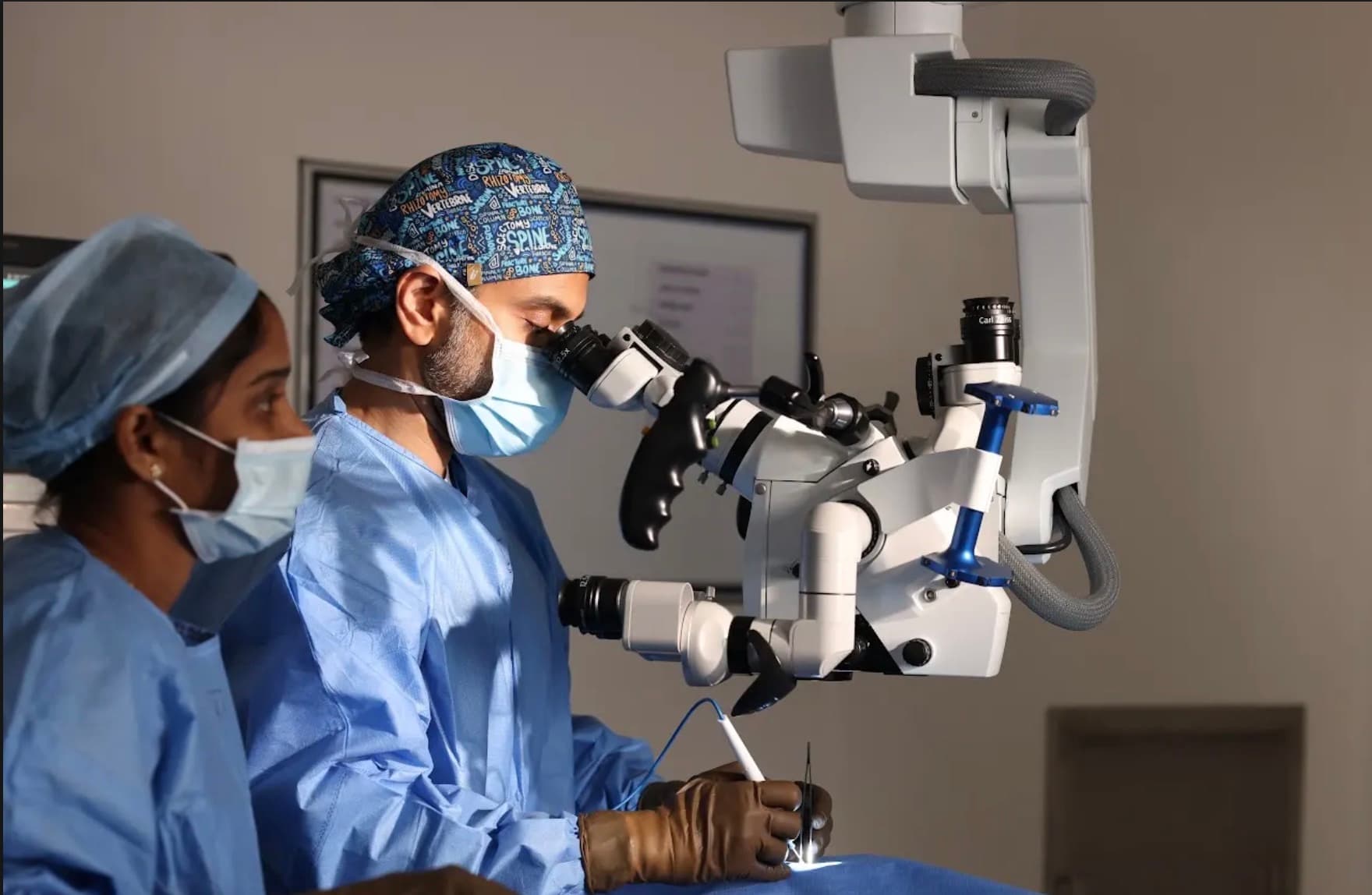
Every plan for pituitary tumour surgery in Hyderabad starts with your tumour's type, size and hormone activity.
Pituitary tumour surgery in Hyderabad carries real risks, like any procedure near the brain, but serious complications are uncommon with careful planning.
What The Risks Include
It's a procedure to remove a tumour from the pituitary gland, usually performed through the nose using an endoscope. Most cases don't need an open operation.
Whether it's a newly found pituitary tumour, a prolactinoma on medicine, or a second opinion on proposed surgery, Dr. Sunkara reviews every case personally before recommending a path forward.

Written & reviewed by Dr. Raveesh Sunkara, Senior Consultant Neurosurgeon & Spine Surgeon · Last updated October 2026 · Next review due April 2027