
Dr. Raveesh Sunkara

What Is Epilepsy?

Schedule ConsultationCase Review

Reviewed personally by Dr. Sunkara · Written for Epilepsy · Updated September 2026

Overview

What Happens During a Seizure

Quick Answer

Epilepsy is a brain condition that causes recurring, unprovoked seizures, sudden bursts of abnormal electrical activity that disrupt normal brain function. Doctors usually diagnose it after two seizures more than 24 hours apart, or one seizure with a high risk of another. Seizures range from brief staring spells to full convulsions.
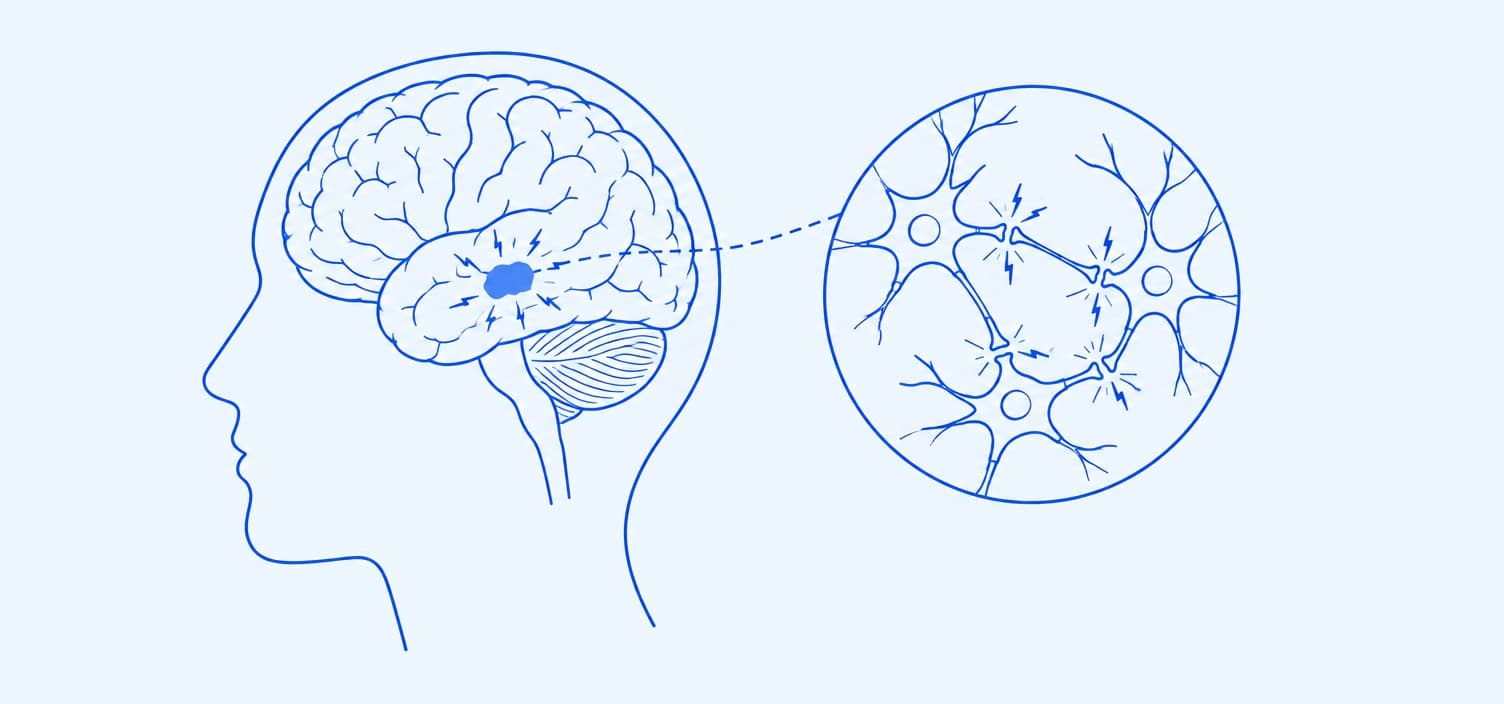
Epilepsy diagram showing abnormal electrical activity spreading from an area of the temporal lobe
Focal epilepsy: a burst of abnormal electrical activity starts in one area, often the temporal lobe, and can spread across the brain.

Inside a healthy brain, neurons fire in organised patterns, passing signals down predictable pathways. In this condition, a cluster of neurons misfires all at once, sending a burst of activity that overwhelms the surrounding circuitry. What happens next depends entirely on where in the brain that burst begins, which is why one person's seizure can look completely different from another's. Some stay contained to a small area and barely show on the outside. Others spread and take over consciousness entirely.

Epilepsy in adults often follows a head injury, a stroke, or an infection, though in many cases doctors never pin down an exact cause. Here's the thing: not every problem needs a surgery. Most people manage it well with medication alone.

Types

Types of Epilepsy

Your EEG report or your doctor's notes will usually name one of these categories. Knowing which type you're dealing with shapes everything from medication choice to whether surgery ever becomes a conversation worth having.

Focal Onset

Seizures start in one specific area of the brain and may or may not affect awareness, sometimes spreading further as the seizure continues.

Generalised Onset

Both sides of the brain are involved from the very first moment, often causing loss of awareness or full-body convulsions.

Combined Focal & Generalised

Some people experience both seizure types, sometimes within the same syndrome, which can make classification more involved.

Unknown Onset

Where a seizure begins isn't always clear from the available evidence, often because no one witnessed how it started.

Symptoms

Signs of Epilepsy To Recognise

  • BEFORE A SEIZURE

    Some people notice a warning sign called an aura: an unusual smell, a rising feeling in the stomach, or a sense of deja vu, moments before it starts.

  • DURING A SEIZURE

    What happens depends on the type: a blank stare and unresponsiveness, jerking or stiffening of the arms and legs, or a sudden fall with loss of consciousness.

  • AFTER A SEIZURE

    Confusion, extreme tiredness, a headache, or sore muscles can last anywhere from a few minutes to several hours once the seizure itself has ended.

  • SUBTLE SIGNS

    Brief lapses in attention, repetitive blinking, or short episodes of confusion are easy to dismiss as daydreaming, especially in children and teenagers.

  • PATTERN OVER TIME

    A single seizure isn't epilepsy on its own. It's the pattern of repeated, unprovoked seizures over time that points a doctor toward the diagnosis.

When To Worry

Most Epilepsy Is Not An Emergency

A single seizure that resolves on its own within a minute or two, in someone already diagnosed, usually doesn't need an ER visit. What matters far more than how dramatic a seizure looks is how long it lasts and whether the person recovers normally afterward.

Seek Immediate Care If You Also Have:

Causes

Common Epilepsy Causes

  1. 01

    Head Injury

    A significant blow to the head, from an accident or a fall, can scar brain tissue and create a focus point for future seizures.

  2. 02

    Stroke Or Brain Bleeding

    Damage from a stroke disrupts normal electrical signalling nearby, and is one of the leading causes of new diagnoses after age 60.

  3. 03

    Brain Infections

    Meningitis, encephalitis, and other infections that inflame brain tissue can leave scarring that later becomes a seizure focus, sometimes appearing years after the illness has resolved.

  4. 04

    Brain Tumours

    A tumour growing in the brain, or the swelling it causes, can irritate surrounding tissue enough to trigger seizures, sometimes before anything else gives it away.

  5. 05

    Genetic Factors

    Some epilepsy syndromes run in families and involve specific gene variants, though most people with the condition have no close relative who has it.

Who's More Likely To Get Epilepsy

  • AGE

    It's most often diagnosed in young children and in adults over 60, though it can start at any age.

  • FAMILY HISTORY

    A parent or sibling with epilepsy raises your own risk somewhat, particularly for certain genetic syndromes.

  • HEAD INJURY HISTORY

    A past traumatic brain injury, especially one severe enough to cause bleeding or loss of consciousness, raises later risk.

  • BRAIN INFECTION HISTORY

    Meningitis or encephalitis earlier in life leaves some people more likely to develop seizures years down the line.

Diagnosis

How Epilepsy Is Diagnosed

  1. 01

    History & Exam

    Dr. Sunkara starts with a detailed account of what the seizure looked like, ideally from someone who witnessed it, along with a full neurological exam to rule out other causes of the episode.

  2. 02

    EEG

    An electroencephalogram records the brain's electrical activity through painless scalp electrodes over minutes or hours, and it's the test that most reliably captures the abnormal patterns behind a diagnosis.

  3. 03

    Brain Imaging

    An MRI scan looks for a structural cause behind the seizures, such as scarring, a tumour, or a malformation, information that shapes which treatment path makes sense.

Treatment

How It's Treated

Most people with the condition do well on medication alone. Treating the underlying cause, like a brain tumour, can sometimes resolve the seizures completely. For structural causes such as scarring or temporal lobe epilepsy, surgery only enters the conversation once several medications have been tried and haven't controlled the seizures.

  • MOST CASES

    start with a single anti-seizure medication, and about half become seizure-free on that first choice alone.

  • SOME CASES

    need a second medication or a dose adjustment after the first drug doesn't fully control seizures.

  • FEW CASES

    become drug-resistant despite trying multiple medications, and that's when surgery is evaluated as an option.

Treatment Options, Step By Step

  1. 01

    Anti-Seizure Medication

    NON-SURGICAL

    The first-line treatment for almost everyone newly diagnosed, chosen and dosed based on seizure type and any other health conditions.

  2. 02

    Medication Review

    NON-SURGICAL

    A structured reassessment of drug choice, dose, and timing when seizures continue despite treatment, often the step that finally gets control right.

  3. 03

    Vagus Nerve Stimulation

    SURGICAL

    A small device, placed under the chest skin in a short operation, sends regular pulses to the vagus nerve when seizures continue and brain surgery isn't an option.

  4. 04

    Epilepsy Surgery

    SURGICAL

    Removes or disconnects the seizure-causing area of the brain, reserved for drug-resistant epilepsy once imaging and EEG pinpoint a clear source.

    See Epilepsy Surgery →
Outlook

Is Epilepsy Curable?

It usually isn't cured in the sense of disappearing for good, but for most people it becomes well-controlled enough that seizures stop interfering with daily life. Some children outgrow specific epilepsy syndromes entirely as their brain develops. That distinction, control versus cure, matters more than the word itself might suggest.

  • UP TO 70%

    of people with epilepsy could live seizure-free with the right medicine, which is why getting the diagnosis right matters.

  • ABOUT 1 IN 3

    people keep having seizures after trying two or more medicines, which doctors call drug-resistant epilepsy. That's when surgery gets assessed.

  • IF IGNORED

    untreated or poorly controlled epilepsy carries real risks, including injury during seizures and, rarely, sudden unexpected death in epilepsy.

Living With It

Epilepsy Triggers To Watch For

These are the everyday factors most likely to bring a seizure on.

Dr. Raveesh Sunkara at his consultation desk, talking a patient through their condition
Before Your Appointment

Questions To Ask Your Doctor

  1. 01

    Which type of epilepsy does my EEG report show?

  2. 02

    Is my epilepsy likely to respond well to medication alone?

  3. 03

    What triggers should I personally watch for and avoid?

  4. 04

    At what point would surgery become worth considering for me?

  5. 05

    How often will I need follow-up EEGs or imaging done?

Already Been Told You Might Need Surgery?

A second opinion on your EEG and imaging can confirm whether medication still has more to offer before surgery is considered.

TESTIMONIALS

Trusted By Families Across India And Abroad.

★★★★★

Review summary

Had a craniotomy for a brain tumour. The risks and recovery were explained in detail, Dr. Sunkara checked in every day, and his cognitive function has improved since.

Siva S.

Brain tumour craniotomy

★★★★★

Review summary

Her relative was admitted with a severe brain injury. Close monitoring and timely surgery led to a remarkable recovery, and he now leads a normal life.

Siri N.

Severe brain injury

★★★★★

Review summary

Their parent was treated in an emergency and recovered after successful brain surgery. Dr. Sunkara even visited during rehab to check on progress.

Venkata Rama Reddy G.

Emergency brain surgery

FAQ

Your Epilepsy Questions, Answered

Epilepsy is a brain condition that causes recurring, unprovoked seizures caused by abnormal electrical activity. It's diagnosed after two unprovoked seizures, or one seizure with a high chance of recurrence.

Get In Touch

Not Sure What Your Epilepsy Diagnosis Means?

Book a consultation with Dr. Sunkara to talk through your EEG and treatment plan, or start with a second opinion if surgery has already been raised.

Dr. Raveesh Sunkara

Written & reviewed by Dr. Raveesh Sunkara, Senior Consultant Neurosurgeon & Spine Surgeon · Last updated September 2026 · Next review due March 2027