
Dr. Raveesh Sunkara

What Is Parkinson's Disease?

Schedule ConsultationCase Review

Reviewed personally by Dr. Sunkara · Written for Parkinson's & Movement Disorders · Updated September 2026

Overview

How Parkinson's Affects the Brain

Quick Answer

Parkinson's disease is a progressive brain condition in which the nerve cells that make dopamine, a chemical that helps control movement, slowly stop working. It usually begins after 60 and causes tremor, stiffness and slower movement. It isn't curable yet, but medication keeps symptoms well controlled for many people, often for years.
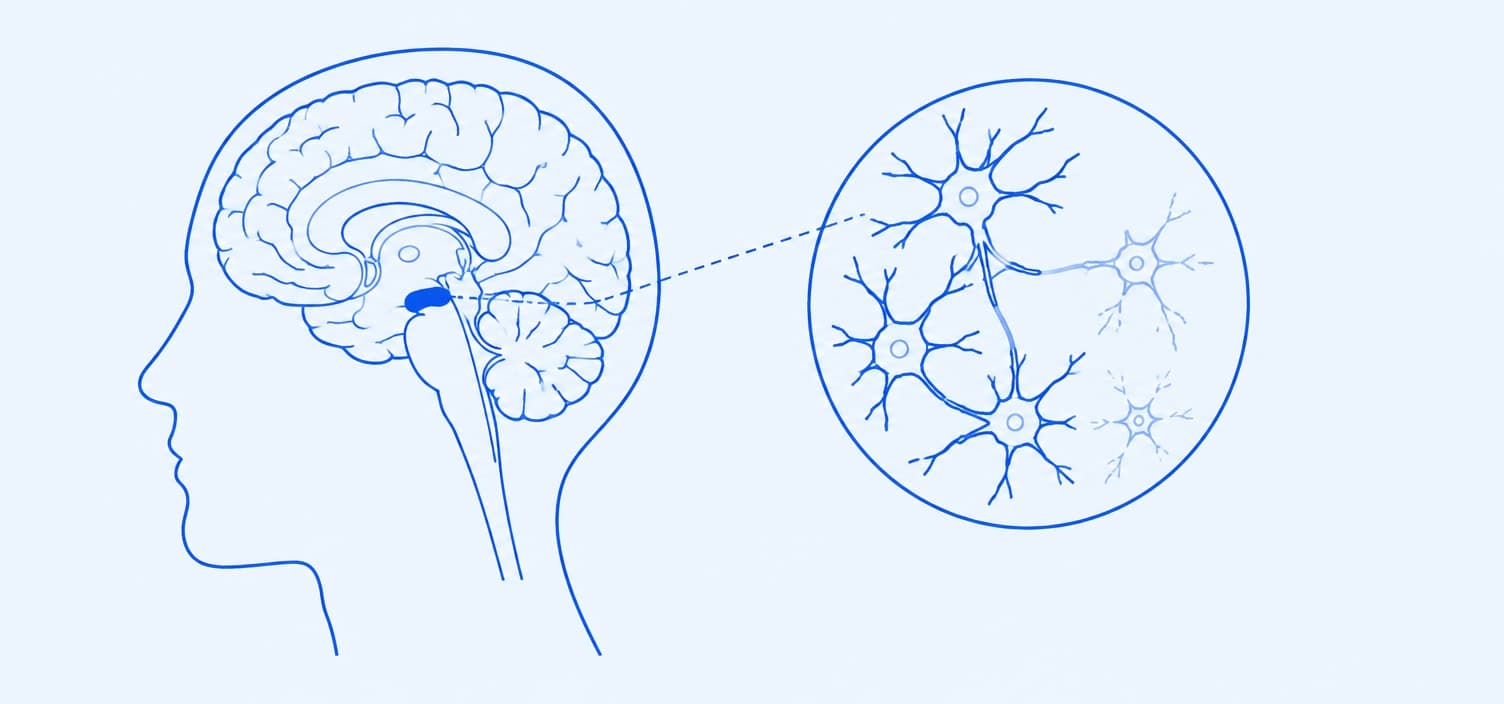
Parkinson's disease diagram showing the substantia nigra deep in the brain with dopamine-producing cells fading
Parkinson's disease: dopamine-producing cells in the substantia nigra, deep in the brain, slowly fade, and movement loses its smooth control.

Deep inside the brain, a small region called the substantia nigra sends dopamine to the circuits that start and smooth out movement. In Parkinson's, those cells are lost gradually, and here's the surprising part: symptoms usually don't show until a large share of them is already gone. That's why the condition often feels as though it arrived overnight, when it's actually been building quietly for years. The brain compensates well, right up until it can't.

Most people are diagnosed after 60, and men are affected slightly more often than women. Many patients arrive expecting to hear about surgery straight away. Most don't need it, at least not early. Not every problem needs a surgery, and for most people with Parkinson's, the right medication comes first.

Types

Types of Movement Disorders

Several conditions share shaking or stiffness, so your doctor's notes may name any of these. The Parkinson's vs essential tremor question comes up most, and the answer changes which medicines actually help.

Parkinson's Disease

Tremor at rest, stiffness and slowness caused by gradual loss of dopamine-producing brain cells, usually starting on one side of the body.

Essential Tremor

A shake that appears when you use your hands, such as writing or holding a cup. It often runs in families and settles at rest.

Dystonia

Muscles contract involuntarily and hold the body in twisting or repetitive postures, affecting the neck, eyelids, a hand or the whole body.

Atypical Parkinsonism

Conditions like multiple system atrophy and progressive supranuclear palsy look like Parkinson's early on but progress faster and respond less to medication.

Symptoms

Early Signs of Parkinson's Disease

  • TREMOR AT REST

    A rhythmic shake, often in one hand or thumb, that shows up when the hand is resting and eases when you reach for something.

  • SLOWER MOVEMENT

    Everyday tasks take longer: buttoning a shirt, getting out of a chair, or writing, with handwriting that gets smaller as you go.

  • MUSCLE STIFFNESS

    Arms, legs or the neck feel rigid and achy. One arm may stop swinging when you walk, which family members often spot first.

  • WALKING AND BALANCE

    Steps become short and shuffling, turning takes several small steps, and balance gets less steady as the condition moves on.

  • NON-MOTOR SIGNS

    A reduced sense of smell, constipation, acting out dreams during sleep, and low mood can appear years before any tremor does.

When To Worry

Most Parkinson's Is Not An Emergency

The condition changes slowly, over months and years, so new or worsening symptoms can almost always wait for a planned appointment. What matters more than how bad the shaking looks is how fast things change. Sudden changes often point to something else and need same-day care.

Seek Immediate Care If You Also Have:

Causes

Parkinson's Disease Causes, As Far As We Know

  1. 01

    Dopamine Cell Loss

    Nerve cells in the substantia nigra gradually die, and as dopamine levels fall, the brain's movement circuits lose the signal they need to run smoothly.

  2. 02

    Protein Clumps

    Abnormal clumps of a protein called alpha-synuclein, known as Lewy bodies, build up inside brain cells and are a hallmark of the condition.

  3. 03

    Genetic Changes

    Changes in genes such as LRRK2 and GBA raise the risk, but most people with the condition have no clear inherited cause or affected relative.

  4. 04

    Environmental Exposure

    Long-term exposure to certain pesticides and solvents, and possibly repeated head injuries, are linked to higher risk, usually alongside age and genes.

Who's More Likely To Get Parkinson's

  • AGE

    Risk climbs with age, and most people are diagnosed after 60, though it can begin before 50.

  • BEING MALE

    Men develop it about one and a half times as often as women, for reasons that aren't fully understood.

  • FAMILY HISTORY

    A parent or sibling with Parkinson's raises your own risk slightly, especially when they were diagnosed at a younger age.

  • PESTICIDE EXPOSURE

    Years of farm work or regular contact with certain pesticides and herbicides is linked to a higher chance of developing it.

Diagnosis

How Parkinson's Disease Is Diagnosed

  1. 01

    History & Exam

    Diagnosis starts with when symptoms began and which side they started on, then a close check of tremor, stiffness, walking and simple repeated movements like finger tapping. No blood test confirms it.

  2. 02

    DaT Scan

    When the picture isn't clear, a DaT scan (SPECT scan) shows how much dopamine activity remains. It helps separate Parkinson's from essential tremor, which leaves dopamine normal, while MRI rules out other causes.

  3. 03

    Medication Response

    A clear improvement on levodopa supports the diagnosis. If you respond well, that's also good news about treatment, because it shows your movement circuits can still use the dopamine medicine provides.

Treatment

How Parkinson's Is Managed

Treatment controls symptoms rather than stopping the condition. Most people do well on medication for years. Surgery is for the few whose symptoms outgrow it, and it's less daunting than most people expect.

  • MOST CASES

    start with levodopa or a similar dopamine medicine, which usually brings a clear improvement in stiffness, slowness and tremor.

  • SOME CASES

    need medication adjustment as the years pass, with doses spaced differently or added medicines to smooth out wearing-off between doses.

  • FEW CASES

    develop fluctuations or tremor that medication can't control well, and that's when deep brain stimulation is assessed as an option.

Treatment Options Over Time

  1. 01

    Levodopa Therapy

    NON-SURGICAL

    The most effective medicine for Parkinson's movement symptoms, replacing the dopamine the brain can no longer make, often combined with other drugs.

  2. 02

    Medication Adjustment

    NON-SURGICAL

    A review of doses, timing and combinations when symptoms start wearing off before the next dose or involuntary movements appear.

  3. 03

    Physio & Speech Therapy

    NON-SURGICAL

    Guided exercise, balance training and speech work that keep you moving and talking clearly, alongside medication at every stage.

  4. 04

    Deep Brain Stimulation

    SURGICAL

    Thin electrodes placed in a movement centre of the brain, connected to a chest device, to steady symptoms that medication no longer controls well.

    How Deep Brain Stimulation Works →
Outlook

Can Parkinson's Be Controlled?

Yes, for most people, and often for many years. It can't be cured yet, but Parkinson's disease stages usually change over years rather than months. Many people keep working, travelling and living independently long after diagnosis. Control, not cure, is the honest goal.

  • 8.5 MILLION PEOPLE

    were living with Parkinson's worldwide in 2019, so it's a well-studied condition with well-tested treatments and a large community of people living well with it.

  • FIVE STAGES

    on the Hoehn and Yahr scale track it from one-sided symptoms to needing help walking, and many people spend years in the early ones.

  • IF IGNORED

    untreated stiffness and slowness make daily tasks harder much sooner, and the risk of falls rises as walking and balance change.

Living With It

Staying Well With Parkinson's

Small daily habits make a real difference to how well medication and movement work.

Dr. Raveesh Sunkara at his consultation desk, talking a patient through their condition
Before Your Appointment

Questions To Ask Your Doctor

  1. 01

    Is this Parkinson's disease, or could it be another movement disorder?

  2. 02

    Which stage am I at, and how quickly might it change?

  3. 03

    Which medication would you start with, and what side effects should I expect?

  4. 04

    How will we know when my medication needs adjusting?

  5. 05

    At what point would deep brain stimulation be worth assessing for me?

Unsure About Your Diagnosis or Medication Plan?

A second opinion can confirm the diagnosis and check whether medication still has room to do more.

TESTIMONIALS

Trusted By Families Across India And Abroad.

★★★★★

Review summary

His wife had hand tremors, memory problems and could no longer walk. An MRI found a tumour, and Dr. Sunkara explained the problem and advised prompt surgery.

Sambasiva Rao L.

Brain tumour surgery

★★★★★

Review summary

Her father was treated for headaches, brain fog, stress and sleep problems. Dr. Sunkara was patient, calm and empathetic throughout.

Asha L.

Headaches and brain fog

★★★★★

Review summary

Had a craniotomy for a brain tumour. The risks and recovery were explained in detail, Dr. Sunkara checked in every day, and his cognitive function has improved since.

Siva S.

Brain tumour craniotomy

FAQ

Your Parkinson's Questions, Answered

Parkinson's disease is a progressive brain condition caused by the gradual loss of dopamine-producing nerve cells that help control movement. It typically causes tremor, stiffness, slowness and balance problems, usually starting after 60.

Get In Touch

Just Been Told You Might Have Parkinson's?

Book a consultation with Dr. Sunkara to talk through your diagnosis and medication, or start with a second opinion if surgery has been suggested.

Dr. Raveesh Sunkara

Written & reviewed by Dr. Raveesh Sunkara, Senior Consultant Neurosurgeon & Spine Surgeon · Last updated September 2026 · Next review due March 2027