
Dr. Raveesh Sunkara

DBS Surgery in Hyderabad

Schedule ConsultationCase Review

Reviewed personally by Dr. Sunkara · Written for DBS Surgery in Hyderabad · Updated September 2026

Overview

What Is Deep Brain Stimulation (DBS) Surgery?

Quick Answer

Deep brain stimulation (DBS) surgery in Hyderabad implants a small device that sends controlled electrical pulses to a specific target inside the brain, easing symptoms of Parkinson's disease, essential tremor, and dystonia once medication alone stops working well. DBS does not cure these conditions. Most patients need several programming visits after surgery before benefits are fully in place.
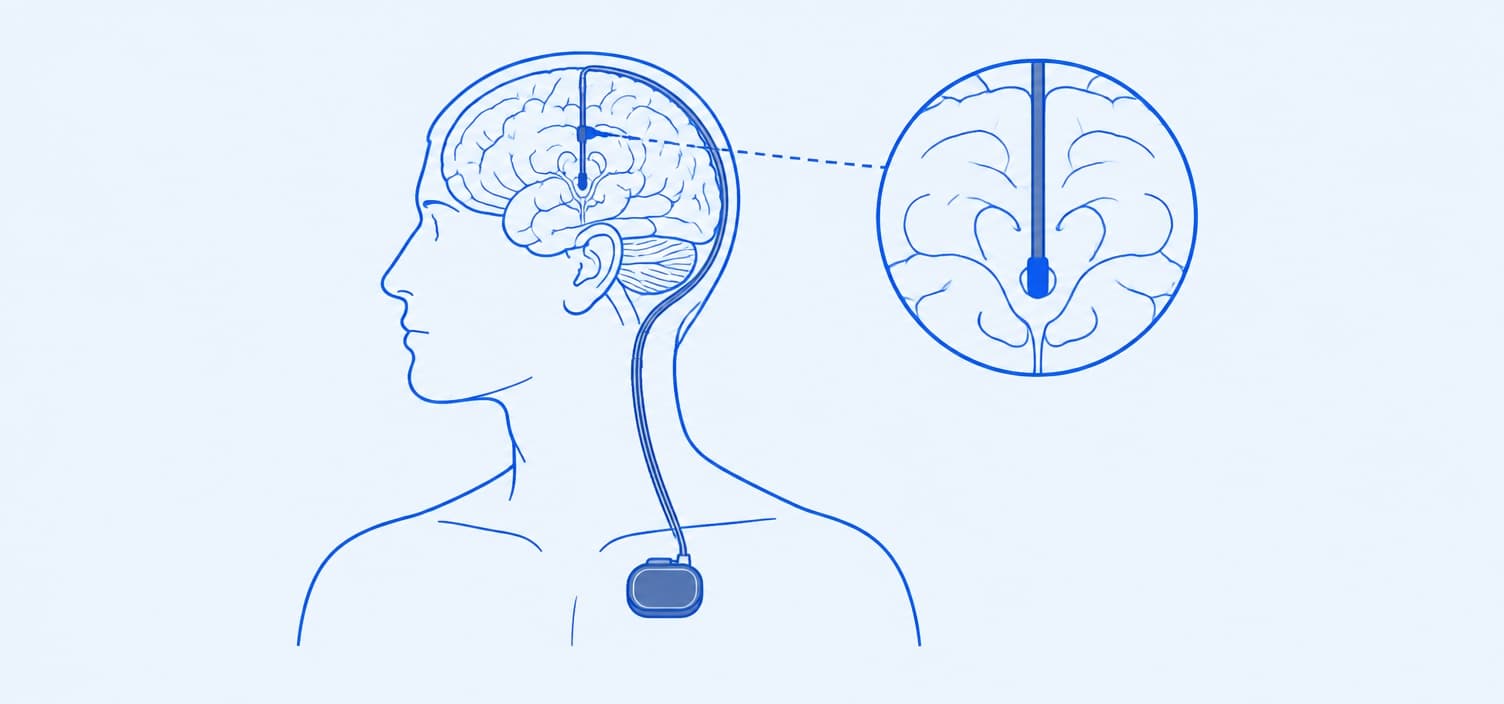
Deep brain stimulation diagram showing a thin electrode placed deep in the brain and connected by a wire to a pulse generator below the collarbone

Dr. Raveesh Sunkara considers deep brain stimulation (DBS) only after medication has been optimized by a movement disorder specialist. Most patients have already tried several drug combinations without lasting relief, and the best DBS treatment in Hyderabad starts with that honest review, not a rush to operate.

DBS is a good example of why surgery is not as scary as you think. It works through a small opening in the skull, not open brain surgery. And the stimulation can be adjusted, or switched off, at any time.

Candidacy

Who Needs DBS Surgery in Hyderabad?

DBS gets considered once medication for these conditions stops giving reliable, lasting control of symptoms, and side effects start outweighing the benefit.

Parkinson's Disease

The most common reason for DBS, especially when tremor, stiffness, or slow movement responds less to medication over time.Parkinson's & Movement Disorders →

Essential Tremor

A shaking that medication hasn't controlled well, particularly when it disrupts eating, writing, or daily tasks most people take for granted.

Dystonia

Involuntary muscle contractions causing abnormal postures or repetitive movements that haven't responded well enough to medication or injections.

Declining Medication Response

The common thread across every condition above: symptoms that once responded well to medication and no longer do, despite dose adjustments.

Think DBS Surgery Might Be Right For You?

TESTIMONIALS

Trusted By Families Across India And Abroad.

★★★★★

Review summary

His wife had hand tremors, memory problems and could no longer walk. An MRI found a tumour, and Dr. Sunkara explained the problem and advised prompt surgery.

Sambasiva Rao L.

Brain tumour surgery

★★★★★

Review summary

Her father was treated for headaches, brain fog, stress and sleep problems. Dr. Sunkara was patient, calm and empathetic throughout.

Asha L.

Headaches and brain fog

★★★★★

Review summary

Had a craniotomy for a brain tumour. The risks and recovery were explained in detail, Dr. Sunkara checked in every day, and his cognitive function has improved since.

Siva S.

Brain tumour craniotomy

The Journey

How The Procedure Works

  1. 01

    Evaluation

    A multidisciplinary team reviews your diagnosis, medication history, and brain imaging together, then confirms which target and approach gives you the best chance of benefit.

  2. 02

    The Procedure

    Thin electrodes are placed at the chosen brain target using imaging and mapping guidance, then connected to a pulse generator implanted under the skin near the collarbone.

  3. 03

    Immediate Recovery

    You're monitored closely for the first day, with the device typically left off until the incision has settled and the first programming visit is scheduled.

Preparation

Anesthesia & Pre-Op Prep

DBS surgery needs more preparation than most procedures, since the surgical plan depends on detailed imaging and testing beforehand.

  • ANESTHESIA TYPE

    DBS can be done with the patient partly awake for testing, or fully asleep using imaging guidance, depending on your case.

  • PRE-OP IMAGING

    A detailed brain MRI and sometimes a CT scan map the exact target for electrode placement and guide the surgical plan in advance.

  • MEDICATION REVIEW

    For Parkinson's, an off-medication assessment measures your symptoms without drugs, which helps confirm DBS is likely to help before surgery is scheduled.

  • WHAT TO BRING

    Every scan and neurology report you have, a complete medicine list with timings, and a family member who knows how your symptoms change through the day.

Options

Types & Techniques of DBS Treatment in Hyderabad

  1. 01

    Subthalamic Nucleus (STN) Stimulation

    Targets a small structure deep in the brain to ease tremor, stiffness, and slow movement in Parkinson's disease, often allowing a meaningful reduction in medication dose.

  2. 02

    Globus Pallidus Internus (GPi) Stimulation

    An alternative Parkinson's and dystonia target, often preferred when dyskinesia (medication-related involuntary movement) is a bigger problem than the underlying tremor itself.

  3. 03

    Thalamic (VIM) Stimulation

    The target used most often for essential tremor, focused specifically on reducing shaking rather than the slowness and stiffness seen in Parkinson's.

  4. 04

    Awake vs Asleep DBS

    Most DBS surgery at this practice is done with you awake, because microelectrode recording and your real-time feedback let the team fine-tune electrode placement precisely. Asleep DBS, using imaging guidance alone, is reserved for select cases.

Curious How DBS Device Programming Works?

Recovery

Recovery & Device Programming

  1. 01

    Day Of Surgery

    Expect a hospital stay of a few days, with pain managed by medication and neurological checks at regular intervals.

  2. 02

    Week 1 To 2

    The device usually stays off while the incision heals. Light activity resumes, and stitches or staples are checked at a follow-up visit.

  3. 03

    Week 2 To 4

    The first programming session activates the device and sets initial settings, usually adjusted gradually over several visits rather than all at once.

  4. 04

    Month 2 To 6

    Programming visits continue as settings are fine-tuned and Parkinson's medication is often reduced gradually, guided by how your symptoms respond over time.
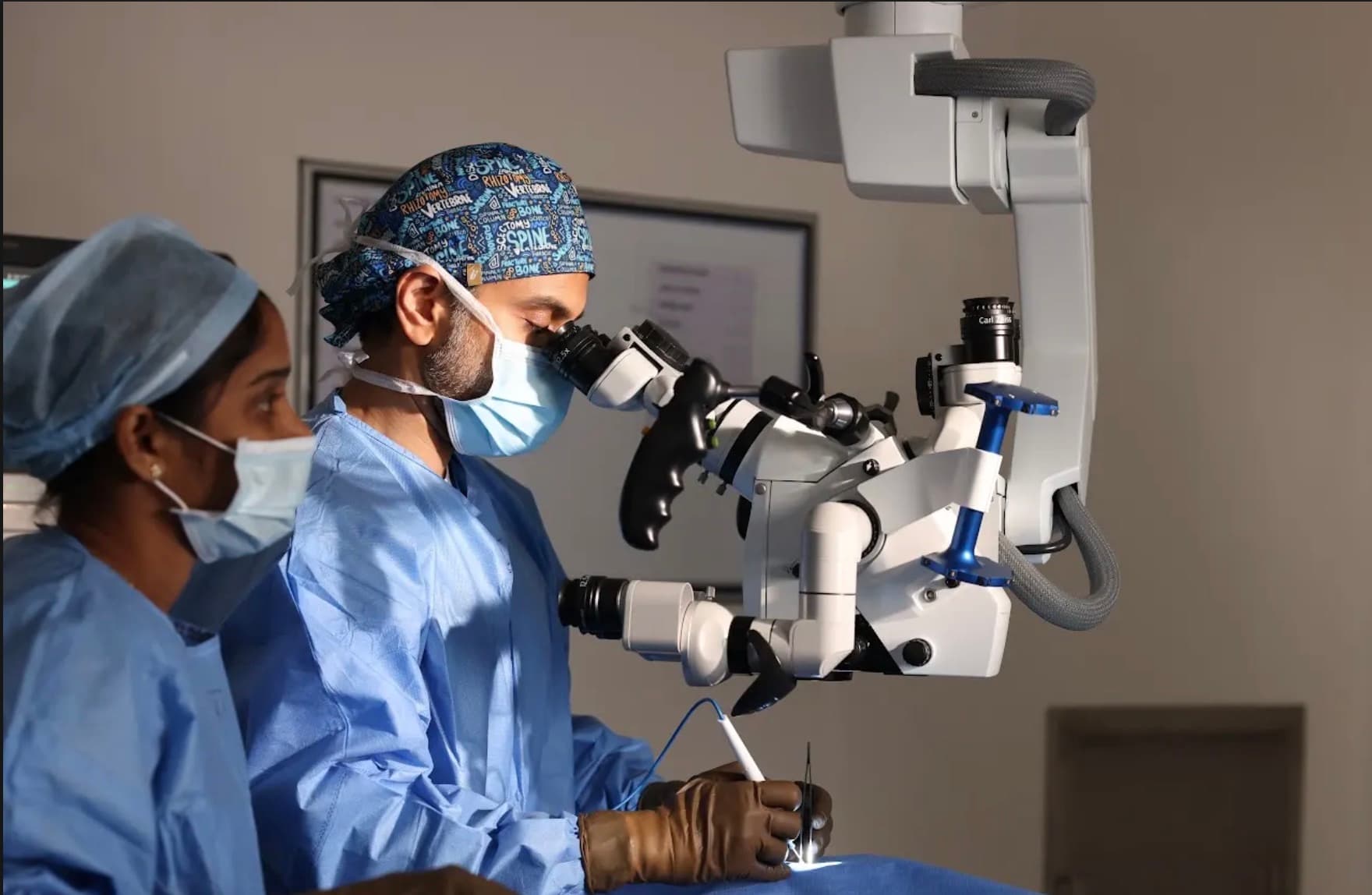
Dr. Raveesh Sunkara operating through a surgical microscope with a theatre nurse beside him
Outcomes

Outcomes & Success Rate

DBS surgery in Hyderabad succeeds or struggles on patient selection and precise programming, not the operation alone.

  • FDA-APPROVED SINCE 1997

    First approved for tremor in 1997, DBS now has almost three decades of clinical use.

  • SYMPTOM CONTROL

    70% of patients experience meaningful symptom control once programming is fully optimized.

  • MEDICATION REDUCTION

    50% of patients achieve a meaningful medication-dose reduction in the long term, once stimulation settings are stable and working well.

Cost

DBS Surgery Cost in Hyderabad

  • DEVICE & SURGERY

    The implanted device itself is a major cost driver, ranging from ₹7 lakh to ₹15 lakh, with surgery adding roughly ₹4 lakh to ₹5 lakh. Most patients can expect a total of about ₹12 lakh to ₹15 lakh.

  • PROGRAMMING VISITS

    Follow-up programming sessions continue for months after surgery. Early post-operative programming is usually included in the surgical package, at no extra cost.

  • INSURANCE & INTERNATIONAL PATIENTS

    Many insurers cover DBS for approved conditions when medication has failed. International patients can request a cost estimate before traveling.

Ready To Talk About DBS Surgery?

Safety

Risks & Safety

DBS is generally safe, but like any brain surgery it carries risks Dr. Sunkara walks through with you individually beforehand.

Possible Risks

FAQ

Your DBS Surgery Questions, Answered

Cost depends on the device chosen and the surgical plan. Expect a total of about ₹12 lakh to ₹15 lakh, and many insurers cover DBS once medication has already been tried and failed.

Get In Touch

Not Sure If DBS Surgery in Hyderabad Is Right For You?

Bring your medication diary and scans to a consultation, or ask for a second opinion on a DBS plan you've been given. No judgment either way, just a clear next step.

Dr. Raveesh Sunkara

Written & reviewed by Dr. Raveesh Sunkara, Senior Consultant Neurosurgeon & Spine Surgeon · Last updated September 2026 · Next review due March 2027