
Reviewed personally by Dr. Sunkara · Written for Slip Disc (Herniated Disc) · Updated September 2026
Quick Answer
So, what is slip disc? It's the everyday name for a herniated or slipped disc, when the soft cushion between two spinal bones pushes out and presses on a nearby nerve. It happens most often in the lower back or neck. Most cases settle with non-surgical care within a few weeks.
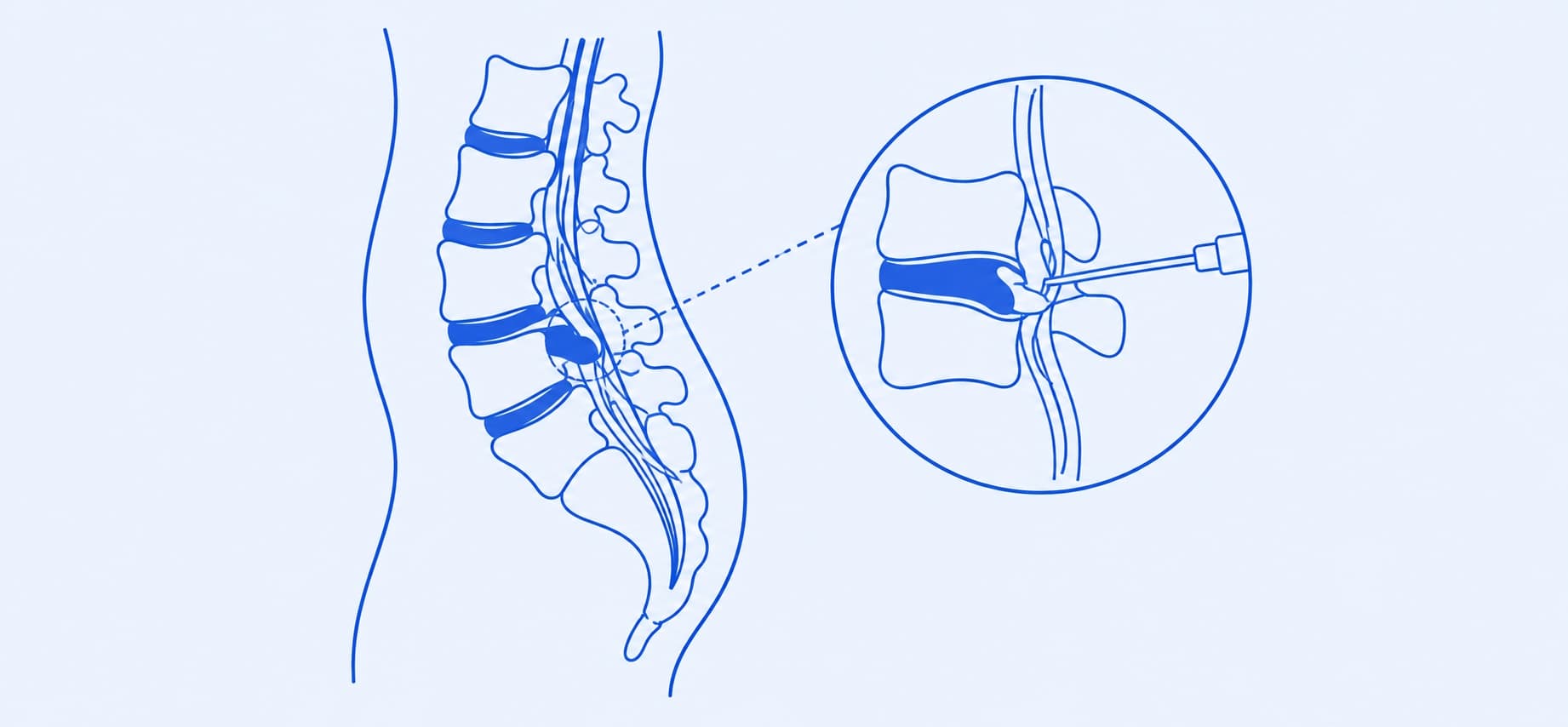
Here's what most people don't expect: a slip disc rarely happens in one dramatic moment. The disc's tough outer ring wears down gradually, often over years of small strains, before one ordinary movement (a sneeze, a twist while gardening, a heavy lift) becomes the final straw. Dr. Raveesh Sunkara sees this pattern often in patients who assumed a single incident caused what had been building for a long time.
A slip disc is most common in the lower back and neck, usually in people between their thirties and fifties. Not every problem needs a surgery. A slip disc is a good example. Most patients recover with conservative care first, and surgery only enters the conversation when that hasn't worked.
Honestly, the terms on an MRI report can sound scarier than they are. Not every case looks the same; your report will usually name one of these four stages, and knowing which one you have shapes what treatment makes sense.
Here's the reassuring part: most disc-related pain, even when it's severe, is not dangerous and can be managed without rushing to the emergency room. What matters more than how much it hurts is whether certain nerve-related warning signs show up alongside it.
Seek Immediate Care If You Also Have:
01
Dr. Sunkara starts with your story: when the pain began, what makes it worse, and where it radiates. A focused physical exam checks reflexes, strength, and sensation to pinpoint which nerve is affected.
02
An MRI is the test that actually confirms the diagnosis, showing the disc, the nerve, and exactly how much they're overlapping. It's painless and doesn't use radiation, unlike a CT scan.
03
The report names the type and level of the disc problem, but Dr. Sunkara always matches it against your actual symptoms. An MRI finding alone doesn't automatically mean you need treatment.
What if surgery isn't actually the next step? For most people, this condition responds well to a staged approach that starts conservative and escalates only when needed.
A targeted steroid injection around the compressed nerve reduces inflammation and pain, often giving weeks to months of relief while the disc settles.
Learn About This Injection →Numbs and treats a single irritated nerve root directly, useful both to confirm which nerve is causing your symptoms and to relieve pain.
See How It Works →A camera-guided procedure that removes the portion of disc pressing on the nerve through a very small incision, for cases that need surgery but not open surgery.
Explore Endoscopic Surgery →Covers the fuller range of surgical options, from microdiscectomy to spinal fusion, for cases that are more complex or haven't responded to less invasive treatment.
See All Surgical Options →Most cases get better on their own, and the herniated portion often shrinks as the body reabsorbs it over time. Recovery isn't always a straight line, though, and how quickly you improve depends on the type of herniation, your age, and how consistently you follow conservative treatment.
A few consistent habits do more for your spine than any single treatment.


LIFT SMART
Bend at the knees, keep the load close to your body, and let your legs do the work instead of your lower back.
STAY ACTIVE, NOT STILL
Gentle movement and walking help more than prolonged bed rest, which can actually slow recovery and weaken supporting muscles.
WATCH YOUR WEIGHT
Carrying less load through your spine reduces pressure on discs that are already under strain and speeds up recovery.
SET UP YOUR WORKSPACE
A chair with proper lower back support and a screen at eye level cuts down the slouching that stresses your discs.
Which type of slip disc does my MRI report show?
Do I need surgery, or is conservative care still reasonable?
How long should I try physiotherapy before considering an injection?
What symptoms mean I should come back in sooner than planned?
If I need surgery, which technique would you recommend for my case?
A second opinion can clarify your MRI findings and confirm whether surgery is the right next step.
A slip disc, also called a herniated disc, happens when the soft cushion between two spinal bones presses on a nearby nerve, most often in the lower back or neck.
Book a second opinion on your scans, or a consultation to talk through treatment options. Either way, you'll leave with a clear, confident next step.

Written & reviewed by Dr. Raveesh Sunkara, Senior Consultant Neurosurgeon & Spine Surgeon · Last updated September 2026 · Next review due March 2027