
Dr. Raveesh Sunkara

What Is Spondylolisthesis?

Schedule ConsultationCase Review

Reviewed personally by Dr. Sunkara · Written for Spondylolisthesis · Updated October 2026

Overview

Spondylolisthesis vs Spondylosis Difference

Quick Answer

So, what is spondylolisthesis? It's a spinal condition where one vertebra slips forward over the bone directly beneath it, usually in the lower back. The slip can come from a small stress fracture, a worn joint, or a vertebra that formed differently from birth. Most cases are mild and never need surgery.
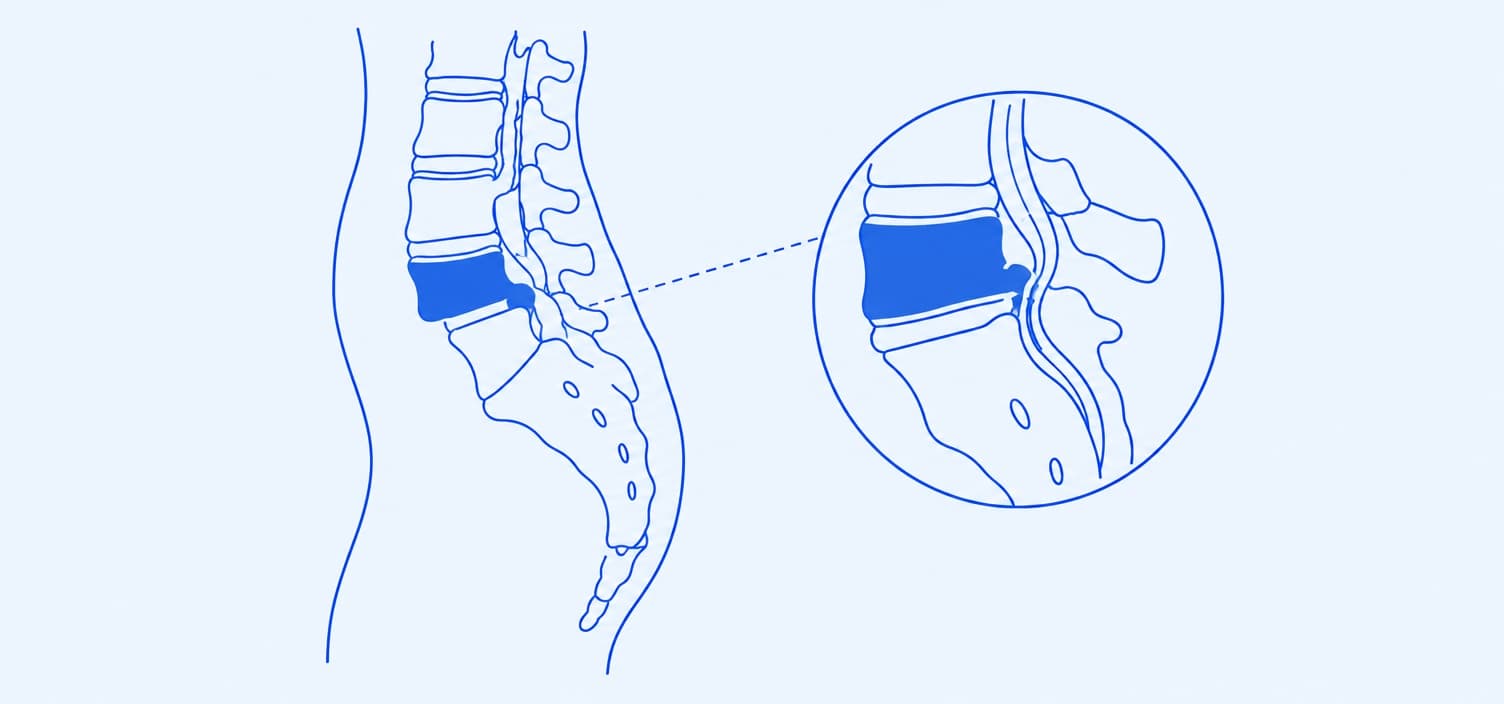
Spondylolisthesis diagram showing the L5 vertebra slipped forward over the sacrum and pinching a nerve root
Spondylolisthesis at L5-S1: the lowest lumbar vertebra slides forward over the sacrum and can narrow the space for the nerves.

Here's what surprises most people: a slipped vertebra rarely announces itself with one dramatic injury. In isthmic and congenital cases, the weak spot has often been there since the teenage years or from birth, waiting for the right combination of load and movement to let the bone shift forward. In degenerative cases it's the opposite story: decades of wear loosen the joints that hold each vertebra in line, and the slip creeps in slowly, often found by accident on an X-ray taken for something else.

Spondylolisthesis is different from spondylosis, which is wear and bone spurs without any forward slip. The two are often confused because both show up on the same X-ray, but only spondylolisthesis involves a vertebra actually moving out of line, and that difference changes the treatment conversation.

Types

Types of Spondylolisthesis

Your scan report usually names spondylolisthesis by what caused the slip, not just how far it's moved. Knowing which type you have shapes what Dr. Sunkara recommends next, since each one behaves differently over time.

Degenerative Spondylolisthesis

The most common type in adults over 50, caused by worn facet joints that no longer hold the vertebra firmly in place as the discs lose height.

Isthmic Spondylolisthesis

Follows a small stress fracture, called spondylolysis, in the bony bridge linking each vertebra's joints. Common in young athletes who repeatedly arch the lower back.

Congenital Spondylolisthesis

Present from birth, when part of a vertebra or its supporting joints doesn't form properly, leaving that level of the spine more likely to slip over time.

Traumatic Spondylolisthesis

The rarest type, following a fracture or dislocation from a major injury such as a fall or road accident, rather than wear or a stress fracture.

Symptoms

Signs of Spondylolisthesis To Recognise

  • LOWER BACK PAIN

    A dull, persistent ache across the lower back that often eases with rest and worsens after standing or walking for long stretches.

  • TIGHT HAMSTRINGS

    Noticeable tightness behind the thighs that doesn't loosen with the usual stretching, a common and often overlooked sign that the lower spine is under strain.

  • LEG PAIN OR SCIATICA

    Pain, tingling or numbness that travels from the lower back into the buttock and down one leg, caused by a nerve root being pinched where the vertebra has shifted.

  • POSTURE CHANGES

    A visibly swayed lower back or a slight forward lean, especially noticeable in more advanced slips, sometimes paired with a shortened stride when walking.

  • PAIN THAT EASES WHEN SITTING

    Standing and walking typically make the pain worse, while sitting or bending forward often brings quick relief, since it opens up space around the compressed nerve.

When To Worry

Most Spondylolisthesis Is Not An Emergency

Most slipped vertebrae cause a slow, manageable ache that responds well to a planned visit rather than a dash to the emergency room. The exception is when the nerves running through the lower spine are under real pressure, which needs same-day attention.

Seek Immediate Care If You Also Have:

Causes

Spondylolisthesis Causes

  1. 01

    Repetitive Stress On The Spine

    Repeated arching and twisting, especially in gymnastics, weightlifting or fast bowling, can crack the thin bony bridge that normally locks each vertebra in place.

  2. 02

    Age-Related Joint Wear

    As the facet joints and discs wear down over the decades, they lose their grip on the vertebra above, letting it gradually creep forward.

  3. 03

    A Vertebra That Formed Differently

    Some people are born with a thinner or oddly shaped pars or facet joint, which makes that level of the spine prone to slipping even without an obvious cause.

  4. 04

    A Significant Spinal Injury

    A fracture or dislocation from a hard fall, road accident or sports collision can shift a vertebra out of line in a single moment.

Who's More Likely To Get Spondylolisthesis

  • AGE

    Degenerative spondylolisthesis becomes far more common after 50, as the spine's supporting joints naturally wear down.

  • SPORT AND ACTIVITY

    Gymnasts, weightlifters and fast bowlers face a higher risk of isthmic spondylolisthesis from the repeated spinal extension their sport demands.

  • FAMILY HISTORY

    A family history of spine problems can make the pars or facet joints more likely to give way under normal stress.

  • BODY WEIGHT

    Carrying extra weight adds steady load to the lower spine's joints, which can speed up degenerative slippage over time.

Diagnosis

How Spondylolisthesis Is Diagnosed

  1. 01

    History & Exam

    Dr. Sunkara asks how the pain behaves with standing, walking and bending, then checks your posture, hamstring flexibility and leg strength for signs a nerve is involved.

  2. 02

    X-Ray With Flexion Views

    A standing X-ray, including bending forward and backward, shows the slip itself and whether it shifts further with movement, which matters more than a single still image.

  3. 03

    MRI When Needed

    An MRI is added when leg pain, numbness or weakness suggests a nerve is being compressed, since it shows the nerves and discs in far more detail than an X-ray.

Treatment

What Actually Helps Spondylolisthesis

Does a confirmed slip always mean surgery? Rarely. Most people improve with targeted exercise and simple pain control, and treatment only escalates if a nerve stays under pressure.

  • MOST CASES

    settle with core-strengthening exercise, posture coaching and a brief course of anti-inflammatory medicine, even when the X-ray shows a clear slip.

  • SOME CASES

    need an image-guided injection to calm a flare or confirm which nerve is causing the leg pain.

  • FEW CASES

    need surgery, usually for a high-grade slip, one that keeps progressing despite conservative care, or a slip with a spinal canal narrowed by a thickened ligament.

Treatment Options Dr. Sunkara Offers

  1. 01

    Epidural Steroid Injection

    NON-SURGICAL

    Steroid placed near the compressed nerve root to calm inflammation and leg pain, often giving enough relief to complete a full course of physiotherapy.

    About Epidural Injections →
  2. 02

    Nerve Root Block

    NON-SURGICAL

    A targeted injection around a single irritated nerve root, useful both to confirm it's the true source of leg pain and to relieve it directly.

    About Nerve Root Blocks →
  3. 03

    Facet Joint Block

    NON-SURGICAL

    An injection into the worn facet joints that are losing their grip on the vertebra above, easing pain that flares with standing or arching the back.

    About Facet Joint Blocks →
  4. 04

    Spine Surgery

    SURGICAL

    Repositions and stabilises the slipped vertebra with fusion, reserved for high-grade slips or ones that keep progressing or compressing a nerve despite other care.

    About Spine Surgery →
Outlook

Spondylolisthesis Grades and Severity: Will It Get Worse?

Most spondylolisthesis is manageable, and the grade on your report is what determines how. Doctors grade the slip by how far the vertebra has moved forward, from Grade I (under 25%) to Grade V, a complete slip off the vertebra below. Lower grades rarely need surgery; higher grades more often do.

  • GRADE I-II

    is the most common finding, a mild to moderate slip that usually responds well to exercise and activity changes alone. It's still important to rule out a narrowed spinal canal (canal stenosis) or nerve compression alongside it.

  • GRADE III-IV

    means a more advanced slip that's more likely to need an injection or, if nerve pressure persists, surgery to stabilise the spine.

  • IF IGNORED

    a progressing high-grade slip can keep compressing the nerves, so new or worsening leg weakness deserves prompt evaluation rather than a wait-and-see approach.

Living With It

Living With Spondylolisthesis

A strong core protects a slipped vertebra better than rest or inactivity ever can.

Dr. Raveesh Sunkara at his consultation desk, talking a patient through their condition
Before Your Appointment

Questions To Ask Your Doctor

  1. 01

    What grade is my spondylolisthesis, and has it changed since my last scan?

  2. 02

    Is my pain coming from the slip itself, or a pinched nerve?

  3. 03

    Which exercises are safe for me, and which should I avoid?

  4. 04

    Are my legs showing any early signs of nerve involvement?

  5. 05

    At what point would you recommend surgery over continued conservative care?

Scan Report Mentions A Grade You Don't Understand?

A second opinion can walk you through exactly what your grade means and whether it changes your treatment plan.

TESTIMONIALS

Trusted By Families Across India And Abroad.

★★★★★

Review summary

His 85-year-old mother had an L5-S1 discectomy for back and leg pain. She recovered quickly and is now pain free.

Ravi D.

L5-S1 discectomy

★★★★★

Review summary

Broken screws from her mother's earlier lower-spine surgery were pressing on a leg nerve. The revision surgery was successful and she now walks freely.

Suman K.

Revision lumbar surgery

★★★★★

Review summary

What stood out in her mother's treatment was that every non-operative option was explored first, with surgery kept as the final step.

Shailaja B.

Mother's spine care

FAQ

Your Spondylolisthesis Questions, Answered

Spondylolisthesis is a condition where one vertebra slips forward over the bone beneath it, most often in the lower back. Many cases are mild and never need surgery.

Get In Touch

Found Out You Have A Slipped Vertebra?

Send your scans over for a clear read on your grade, or book a consultation to plan care around how it's affecting your day.

Dr. Raveesh Sunkara

Written & reviewed by Dr. Raveesh Sunkara, Senior Consultant Neurosurgeon & Spine Surgeon · Last updated October 2026 · Next review due April 2027