
Reviewed personally by Dr. Sunkara · Written for Brain Aneurysm Treatment in Hyderabad · Updated October 2026
Quick Answer
Brain aneurysm treatment in Hyderabad covers two related but distinct problems: a weak, bulging blood vessel (aneurysm) and a tangle of abnormal vessels (AVM). Options range from watchful imaging for small, stable cases to catheter-based coiling, open microsurgical clipping, AVM removal, or radiosurgery, chosen by size, location and whether it has bled.
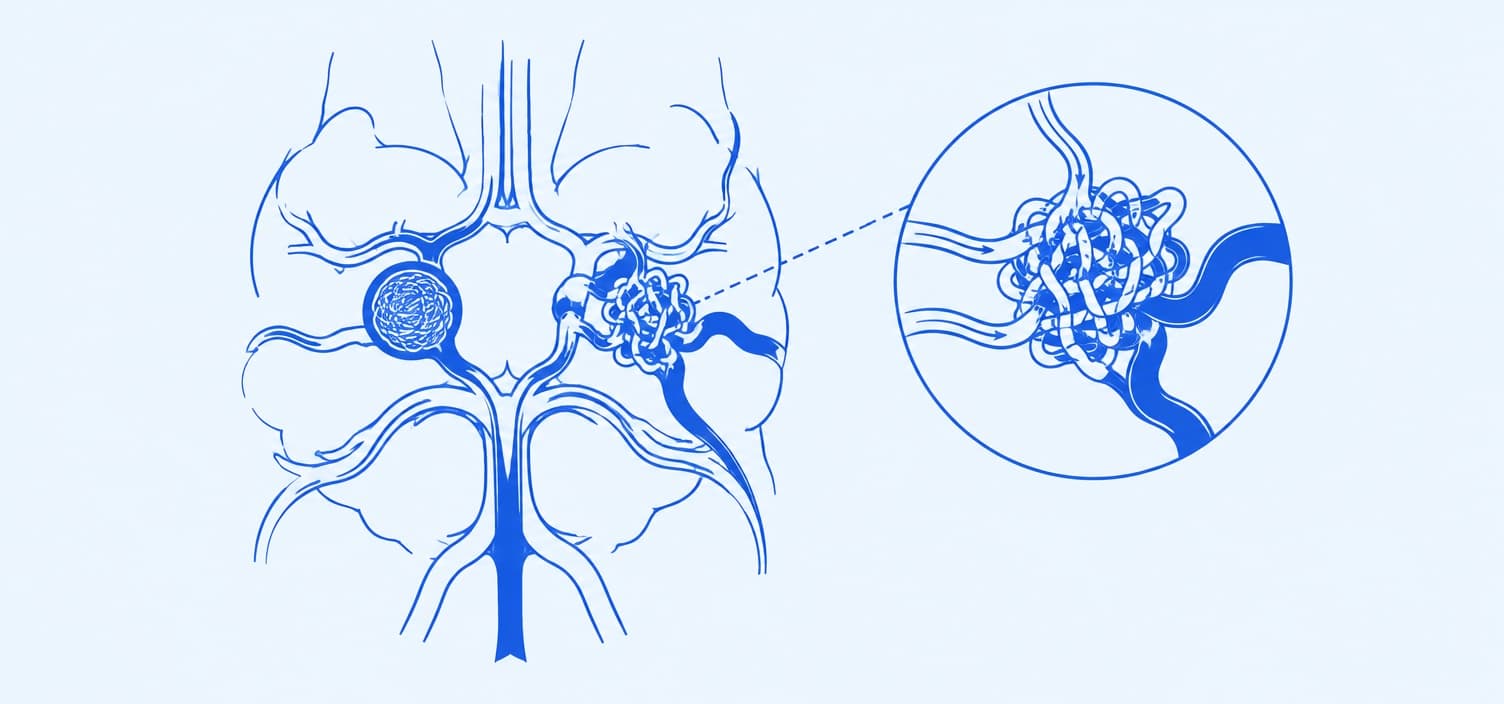
These procedures sit within Dr. Sunkara's broader neurovascular surgery practice. Neurovascular Surgery → Many patients brace for an operation the moment a scan finds something unusual. Often the first real question isn't which technique to use. It's whether this aneurysm or AVM needs treating at all.
Not every aneurysm needs an operation. Many small, unruptured ones are simply watched with repeat scans instead. A ruptured aneurysm is different: a sudden, worst-headache-of-your-life moment is a true emergency, so get to the nearest emergency department right away rather than waiting it out.
Most people land here one of two ways: an aneurysm or AVM found by accident on a scan, or a genuine emergency after a bleed.
01
Imaging, usually a CT or MR angiogram, maps the vessel or tangle involved, and Dr. Sunkara weighs whether the safer path is surgery, an endovascular procedure, radiosurgery, or watching it.
02
The technique depends entirely on the diagnosis, from microsurgical clipping or AVM removal through an open approach, to catheter-based coiling or targeted radiosurgery.
03
Recovery is watched closely afterward, whichever approach was used, since both surgical and endovascular treatment carry a real risk of delayed complications.
What does getting ready for aneurysm or AVM treatment actually involve? It depends on whether it's open surgery or an endovascular procedure.
01
An open microsurgical technique where a small metal clip is placed across the aneurysm's neck, sealing it off from blood flow permanently while leaving the artery itself intact.
02
A catheter is guided through the blood vessels from the groin to the aneurysm, where soft platinum coils pack the sac and stop blood from filling it, sometimes with a stent or flow diverter for complex shapes. Dr. Sunkara's interventional neuroradiology colleague performs this as part of a coordinated team.
03
The tangled vessels are carefully removed through an open approach, sometimes after embolization shrinks its blood supply first, or treated with a combination of methods. Dr. Sunkara decides on a patient-specific basis and operates whenever possible, most often where the AVM sits somewhere safe to reach.
04
Targeted radiation delivered over one or a few sessions gradually closes off a small AVM's abnormal vessels, an option when open removal carries too much risk, performed at Dr. Sunkara's own center.Stereotactic Radiosurgery →
01
Close monitoring in the ICU or a dedicated neuro unit, watching for bleeding, vessel spasm, or any change in neurological function.
02
These days carry the highest risk of vessel spasm after an aneurysm procedure, so monitoring stays close before a move to the ward.
03
Coiling patients are often back to light routines sooner than clipping or AVM surgery patients, whose incision needs more time to heal.
04
Follow-up imaging, usually an angiogram, confirms the treated vessel has stayed sealed or the AVM has closed, and checks for any recurrence.
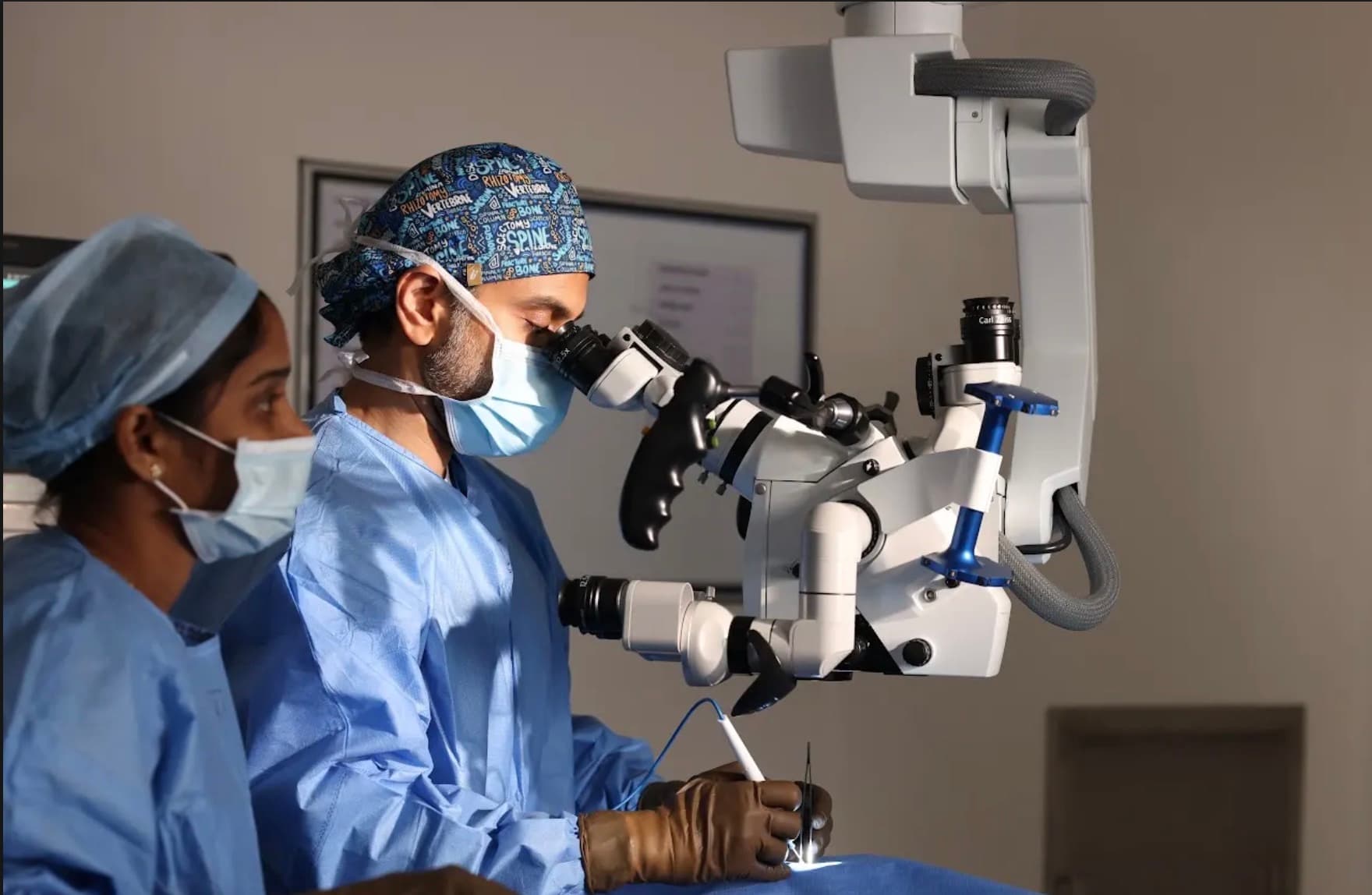
Clipping, coiling, AVM surgery and radiosurgery are different procedures, so each gets its own figure here.
Every brain aneurysm treatment in Hyderabad carries real risks, whether surgery, an endovascular procedure, or radiosurgery. In practice, most patients worry more than the statistics justify.
What The Risks Include
There's no single ranking that settles this. Ask how often the surgeon treats aneurysms and AVMs, and whether they explain watching as an option, not just surgery.
Bring your scan report for a second opinion, or book a consultation to discuss the right brain aneurysm treatment in Hyderabad, whether that's watching, an endovascular procedure, surgery, or radiosurgery.

Written & reviewed by Dr. Raveesh Sunkara, Senior Consultant Neurosurgeon & Spine Surgeon · Last updated October 2026 · Next review due April 2027