
Dr. Raveesh Sunkara

Brain Stroke Treatment in Hyderabad

Schedule ConsultationCase Review

Reviewed personally by Dr. Sunkara · Written for Brain Stroke Treatment in Hyderabad · Updated October 2026

Overview

What Is Brain Stroke Treatment?

Quick Answer

Brain stroke treatment in Hyderabad begins the moment you reach the nearest emergency department, not at a scheduled visit. Care starts with rapid brain imaging to confirm whether the stroke is ischemic or hemorrhagic, then moves to clot-dissolving medicine, clot removal, or surgery for bleeding, depending on what the scan shows.
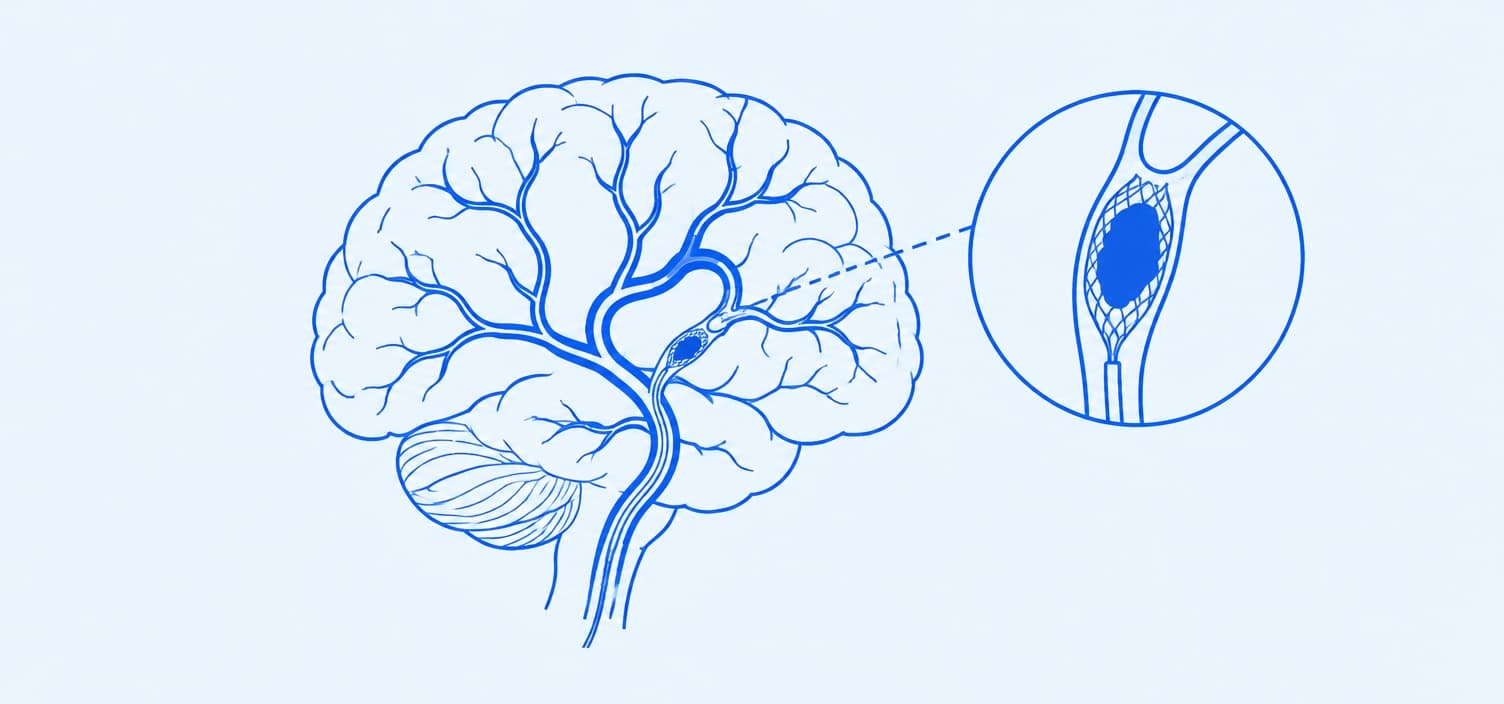
Brain stroke treatment diagram showing a clot blocking a brain artery and a catheter device pulling the clot out

Brain stroke treatment is rarely a long operation. For most patients it isn't surgery at all, it's a race against the clock that starts with a scan and clot-dissolving medicine. The nearest emergency department beats the "best" one if reaching it costs you an extra hour.

Many patients arrive at the emergency department expecting surgery and leave with nothing more than medicine and a rehabilitation plan. Dr. Sunkara's role begins only for the smaller group who need urgent surgery, and even then, it's usually far more targeted than people expect.

Candidacy

Who Needs Brain Stroke Treatment in Hyderabad?

Brain stroke treatment becomes urgent the moment stroke symptoms appear, whether the cause turns out to be a clot, a bleed, or a narrowed artery.Brain Stroke →

Ischemic Stroke

A sudden blockage that cuts off blood flow to part of the brain, where every minute without treatment matters.

Hemorrhagic Stroke

Bleeding into or around brain tissue after a weakened blood vessel gives way, raising pressure inside the skull.

Ruptured Brain Aneurysm

A burst or leaking aneurysm that bleeds directly into brain tissue, one of the causes behind a hemorrhagic stroke.Brain Aneurysm & AVM →

Brain Swelling After Stroke

Dangerous swelling that raises pressure inside the skull after a large stroke, sometimes needing surgery to relieve it.

Carotid Artery Narrowing

Narrowing of the neck arteries supplying the brain, a major and often silent risk factor for a future stroke.

Had A Stroke Or Worried About One?

TESTIMONIALS

Trusted By Families Across India And Abroad.

★★★★★

Review summary

Her father came in with a brain stroke and paralysis, and the family had lost hope. With treatment he can now walk and speak properly.

Swetha R.

Stroke with paralysis

★★★★★

Review summary

Her father had a grade 4 brain haemorrhage. Dr. Sunkara explained how critical it was, took every necessary step including a shunt, then guided his rehab.

Rushita G.

Brain haemorrhage

★★★★★

Review summary

Their parent was treated in an emergency and recovered after successful brain surgery. Dr. Sunkara even visited during rehab to check on progress.

Venkata Rama Reddy G.

Emergency brain surgery

The Care Journey

How Brain Stroke Treatment Works in Hyderabad

  1. 01

    Emergency Arrival

    You're brought to the emergency department, where the team runs a rapid neurological check and rushes you for brain imaging to see exactly what's happening inside the brain.

  2. 02

    Treatment Decision

    The scan shows whether it's a clot or a bleed, and that single answer decides whether you get clot-dissolving medicine, a clot-retrieval procedure, or surgery next.

  3. 03

    Immediate Stabilisation

    Once treated, you move to a stroke unit or ICU for close monitoring, since the hours right after treatment carry their own risks.

Assessment

Emergency Assessment

Every brain stroke case starts the same way: imaging first, then a time-sensitive decision about which treatment fits.

  • RAPID BRAIN IMAGING

    A CT scan, usually done within minutes of arrival, shows the emergency team whether they're dealing with a clot or a bleed.

  • ISCHEMIC OR HEMORRHAGIC

    This single distinction decides everything that follows, since clot-dissolving medicine used for one type can be dangerous for the other.

  • THE TREATMENT WINDOW

    Clot-dissolving medicine is most effective within the roughly 4.5-hour window set by American Stroke Association guidelines, so reaching an emergency department fast matters most.

  • WHAT TO TELL THE TEAM

    The exact time symptoms started matters more than almost anything else you can tell the team, along with any blood thinners you take.

Approach

Stroke Surgery in Hyderabad: Types & Techniques

  1. 01

    Clot-Dissolving Medicine (Thrombolysis)

    A medicine given through an IV breaks down the clot blocking a brain artery, used only for ischemic stroke within the treatment window and never for a bleed.

  2. 02

    Mechanical Thrombectomy

    A catheter is guided through the blood vessels to the blocked artery, where a small device pulls the clot out directly, often used for larger clots medicine alone can't clear. Dr. Sunkara's interventional neuroradiology colleague performs this as part of a coordinated stroke team.

  3. 03

    Haematoma Evacuation

    When bleeding inside the brain builds into a sizeable clot, surgery, open or endoscopic depending on the case, removes it directly to relieve pressure on the surrounding brain tissue, the same microsurgical approach used in neurovascular surgery for a ruptured aneurysm.Neurovascular Surgery →

  4. 04

    Decompressive Craniectomy

    For dangerous swelling after a large stroke, a section of skull bone is temporarily removed to relieve pressure before it damages the brain further.

Wondering What Stroke Recovery Looks Like?

Recovery

Stroke Unit Care & Rehabilitation Timeline

  1. 01

    First 24 To 48 Hours

    Close monitoring in a stroke unit or ICU watches for swelling, another clot, or any change in how you're responding.

  2. 02

    Day 2 To 5

    Physiotherapy and speech therapy often start at the bedside as soon as you're stable enough, sometimes within the first two days.

  3. 03

    Week 1 To 4

    Rehabilitation moves from the hospital stroke unit to a dedicated rehab setting, with therapy intensity guided by how much function needs rebuilding.

  4. 04

    Month 2 Onward

    Most functional recovery happens in the first three months, though gains from consistent rehabilitation can continue well beyond that.
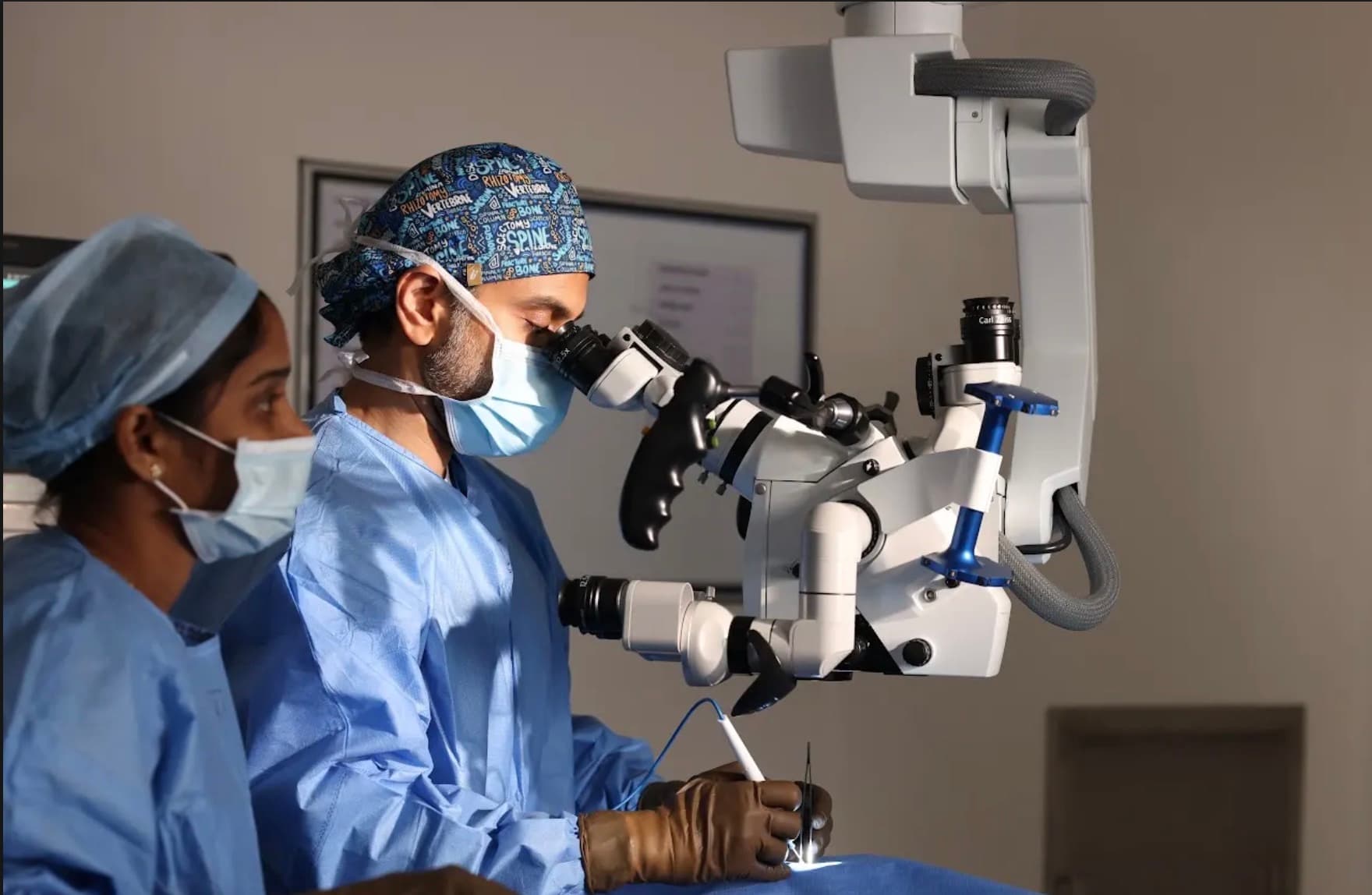
Dr. Raveesh Sunkara operating through a surgical microscope with a theatre nurse beside him
Outcomes

Outcomes & Success Rate

Stroke outcomes depend heavily on stroke type, severity, and how quickly treatment began, not one blended number.

  • EVERY MINUTE UNTREATED

    costs the brain roughly 1.9 million neurons, a figure from a 2006 study in the journal Stroke.

  • MECHANICAL THROMBECTOMY

    achieves successful clot removal in 70% of patients who reach treatment within the safe window, at this practice.

  • SURGERY FOR BLEEDING

    50% of haematoma evacuation and decompressive craniectomy cases achieve good functional recovery at this practice.

Cost

Stroke Surgery Cost in Hyderabad

  • TREATMENT TYPE

    Clot-dissolving medicine, thrombectomy, and surgery for bleeding are priced very differently, typically ranging from ₹2 lakh for surgery to ₹4 lakh for thrombectomy, though the final cost varies with how many recovery days are needed.

  • HOSPITAL STAY & ICU CARE

    ICU days, stroke-unit stay length, and rehabilitation sessions add to the final bill well beyond the base procedure fee.

  • INSURANCE & INTERNATIONAL PATIENTS

    Most major insurers cover emergency stroke care as medically necessary. International patients can request a personalised cost estimate before travel.

Ready To Discuss A Stroke Diagnosis With Dr. Sunkara?

Safety

Risks & Safety

Brain stroke treatment in Hyderabad carries risks, whether it's medicine, a catheter procedure, or surgery, though complications are less common than you'd expect.

What The Risks Include

FAQ

Your Brain Stroke Treatment Questions, Answered

Go to the nearest emergency department immediately, regardless of which hospital it is. Dr. Sunkara is reachable afterward for a second opinion and ongoing care.

Get In Touch

Recovering From A Stroke Or Worried About Another? Talk To Dr. Sunkara

Whether it's a stroke in progress, a recent diagnosis, or a second opinion on surgery already recommended, Dr. Sunkara reviews every case personally before advising next steps.

Dr. Raveesh Sunkara

Written & reviewed by Dr. Raveesh Sunkara, Senior Consultant Neurosurgeon & Spine Surgeon · Last updated October 2026 · Next review due April 2027