
Reviewed personally by Dr. Sunkara · Written for Scoliosis Treatment in Hyderabad · Updated October 2026
Quick Answer
Scoliosis treatment in Hyderabad covers two very different patient groups: growing children with idiopathic curves, and adults whose spines have degenerated with age. Most mild curves are simply observed or treated with a brace while a child is still growing. Surgery is reserved for curves that keep progressing, or that cause real pain, nerve symptoms or breathing difficulty.
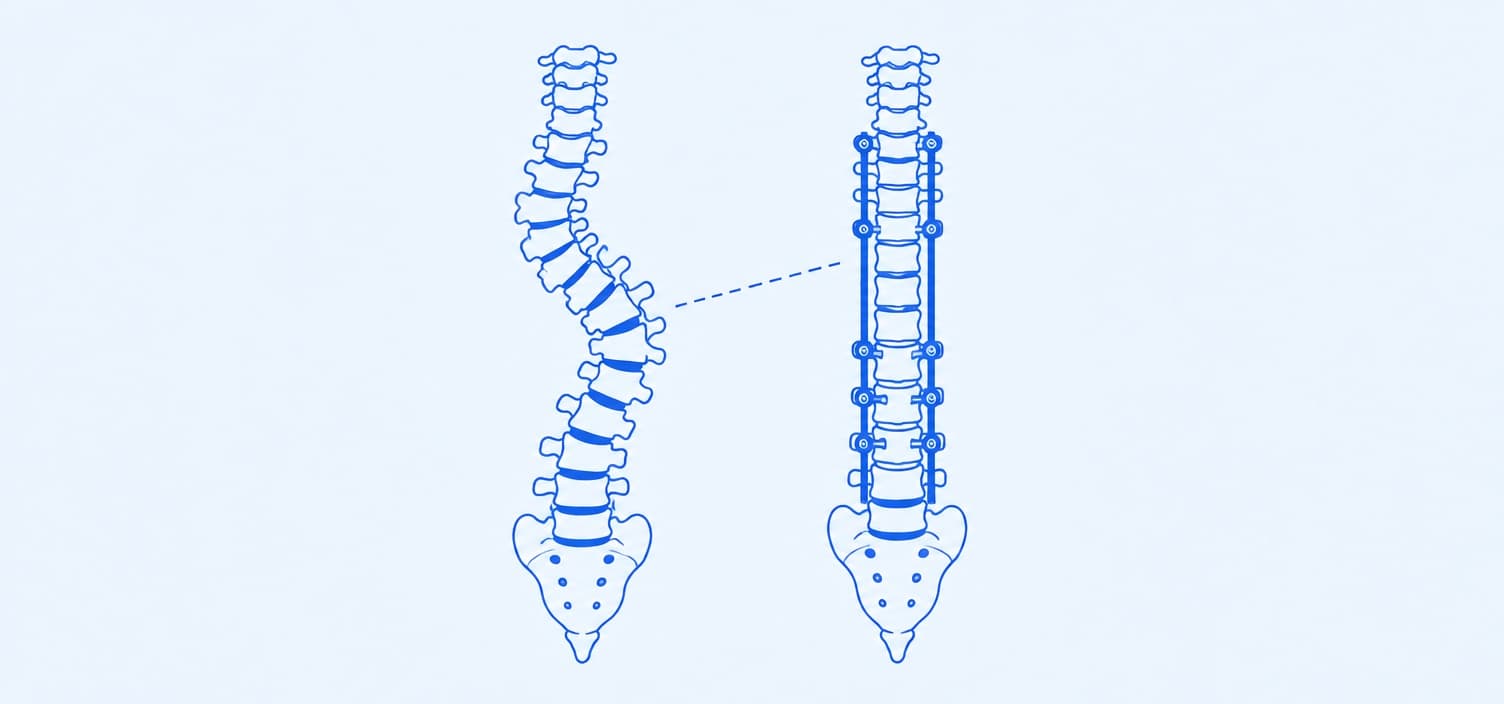
For most children and adults, scoliosis treatment doesn't start with an operation. In growing kids it usually starts with watching and bracing. Pediatric Neurosurgery → In adults, whose spine has stopped growing, care shifts toward pain relief and halting further progression instead.
Here's the reassuring part: most scoliosis never needs an operation at all. Many patients arrive expecting a long spinal operation and leave with a bracing or physiotherapy plan instead. Even when surgery is the right call, Dr. Sunkara favors the least invasive technique that still corrects the curve safely.
A scoliosis specialist in Hyderabad typically sees these curves in two groups: growing children with idiopathic scoliosis, and adults with pain from a degenerating spine.
01
A standing X-ray measures the curve's Cobb angle, and Dr. Sunkara reviews how much growth is left before deciding between watching, bracing or surgery.
02
When surgery is needed, rods and screws straighten and fuse the curved segment, through either an open posterior approach or a minimally invasive technique, with intraoperative nerve monitoring used in most cases to protect spinal cord function.
03
Recovery is watched closely in the days after surgery, checking the fusion is holding and that there's no new weakness or numbness in the legs.
What does getting ready for scoliosis surgery actually involve? Here's what Dr. Sunkara's team covers before the day arrives.
01
For moderate curves in a child who's still growing, a custom-fitted brace worn many hours a day can stop the curve from worsening, though it won't straighten the spine permanently.
02
The standard surgical correction for larger curves, using the same rod-and-screw instrumentation as general spine surgery: an incision along the back straightens the spine and holds it permanently in its corrected position.Spine Surgery →
03
Adult curves often come with nerve compression as well as the deformity itself, so surgery here frequently combines fusion with decompression to relieve pressure on the nerves.
04
Where the curve and anatomy allow it, smaller incisions and specialized instruments can achieve the same correction with less muscle damage and a faster early recovery. Dr. Sunkara offers this when the case doesn't require bony cutting or osteotomy.
01
Close monitoring in the ICU or a dedicated spine unit, watching for bleeding, any change in leg strength, and pain control.
02
Gentle walking usually begins within a day or two, with the hospital stay typically lasting 1 week to 10 days after fusion surgery.
03
Energy builds back gradually and the incision heals, though bending, twisting and heavy lifting usually stay off-limits during this stretch.
04
Follow-up X-rays confirm the fusion is solid, and most patients, including teenagers back at school, return to normal activity and sports.
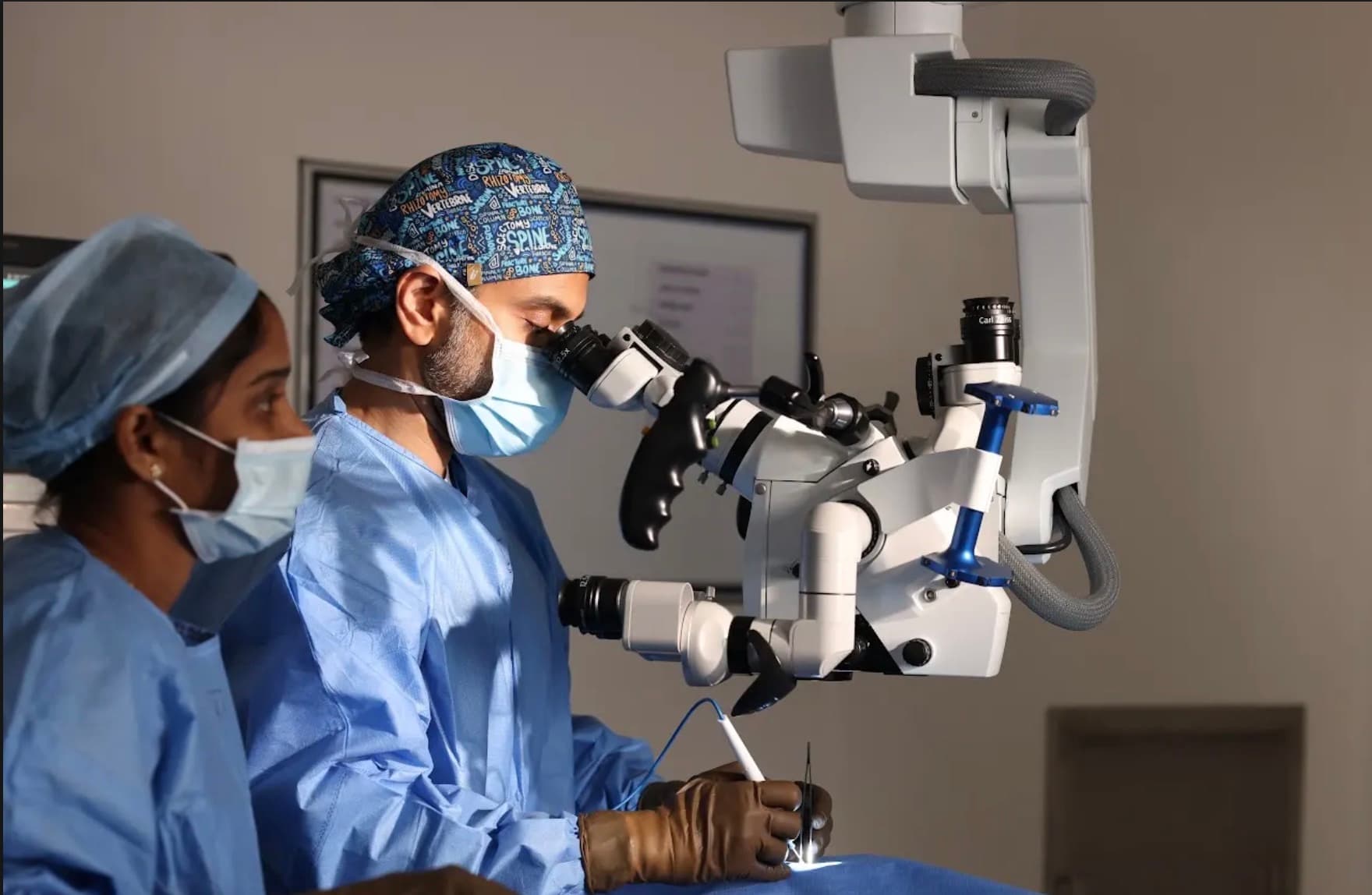
Scoliosis surgery in Hyderabad spans several techniques, so each has its own outcome picture here.
Every scoliosis treatment in Hyderabad carries some risk, whether it's bracing, fusion or a minimally invasive approach. Serious complications are still uncommon.
What The Risks Include
There's no single ranking for this. Ask how many scoliosis cases the surgeon treats each year, and whether they explain bracing and surgery options clearly before recommending one.
Bring your latest standing X-ray, whether it's a new diagnosis, a brace that isn't working, or surgery someone has already suggested. Dr. Sunkara reviews every scoliosis case personally.

Written & reviewed by Dr. Raveesh Sunkara, Senior Consultant Neurosurgeon & Spine Surgeon · Last updated October 2026 · Next review due April 2027