
Reviewed personally by Dr. Sunkara · Written for Spinal Tuberculosis Treatment in Hyderabad · Updated October 2026
Quick Answer
Spinal tuberculosis treatment in Hyderabad usually means a six-to-twelve-month course of anti-TB medicine, with surgery reserved for specific situations: nerve compression causing weakness, spinal instability or deformity, an abscess that doesn't respond to drainage, or a diagnosis that's still unclear. Spinal tuberculosis is also called Pott's disease, after the 18th-century surgeon who first described it. Most people never need an operation.
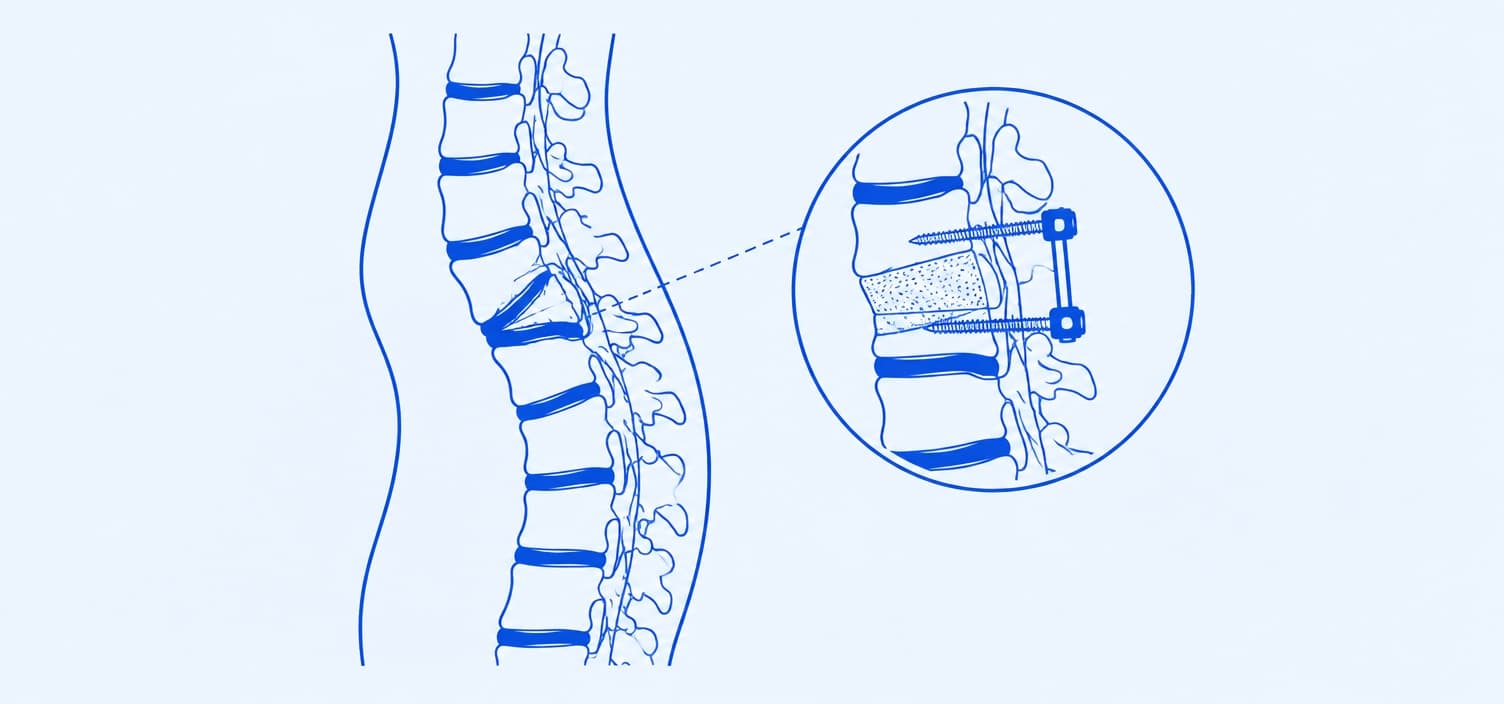
Here's what catches most patients off guard: by the time back pain from spinal TB gets investigated, the infection has often been active for months. Debridement, decompression and fusion draw on Dr. Sunkara's broader spine surgery practice.Spine Surgery →
Not every problem needs a surgery, and that's especially true here. Many patients arrive expecting an operation and leave with just a prescription and a plan to finish it. Surgery only joins the plan for the handful of cases above. Read more about spinal tuberculosis as a condition.Spinal Tuberculosis →
When planning spinal tuberculosis treatment in Hyderabad, Dr. Sunkara doesn't start with surgery. It only joins the plan in these specific situations.
01
An MRI and a focused TB workup confirm the diagnosis and its stage, and Dr. Sunkara decides whether medicine alone is enough or surgery needs to join it.
02
When surgery is needed, the approach ranges from a CT-guided biopsy or drainage to open decompression and stabilisation, chosen to match exactly what the scans show.
03
Recovery is watched closely for wound healing and neurological change, while the anti-TB medicine course that treats the infection itself continues on its own schedule, managed by Dr. Sunkara's team with a physician brought in only if side effects arise.
What does getting ready for spinal TB surgery actually involve? It depends on which procedure your scans point to.
01
A needle guided by CT takes a tissue or fluid sample from the infected vertebra, confirming TB and ruling out a tumour or a different infection when imaging alone isn't conclusive.
02
A needle placed through the same imaging guidance drains a paraspinal abscess that medicine alone hasn't cleared, often easing pain and fever within days. Dr. Sunkara performs this himself, occasionally with an interventional radiologist's help for deep-seated collections.
03
Bone, disc material or abscess pressing on the spinal cord or a nerve root is carefully removed, relieving the pressure that's causing weakness or numbness.
04
Infected bone and tissue are cleared away, and implants or bone graft rebuild and stabilise the spine wherever collapse has made it unstable or deformed.
01
Close monitoring in the ICU or a dedicated ward, watching for bleeding, wound issues, or any change in leg strength or feeling.
02
Gentle walking with support begins as pain allows, with most patients discharged within 4 to 5 days, while the anti-TB medicine keeps running on its own six-to-twelve-month schedule.
03
Wound healing is checked, brace wear continues if one was prescribed, and strength and walking distance slowly build back up.
04
Follow-up imaging tracks fusion and infection clearance while the full anti-TB medicine course keeps running through to its final month.
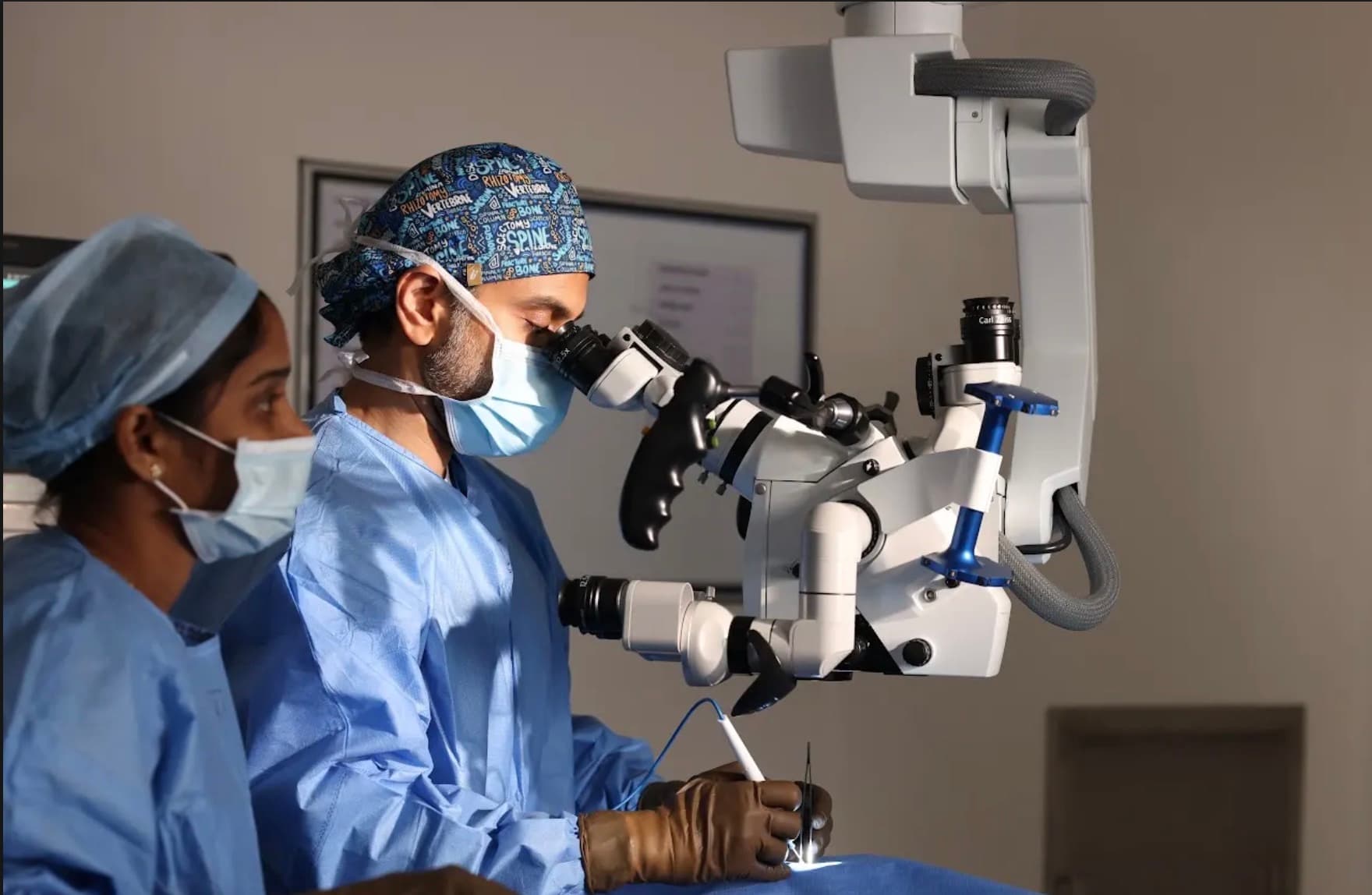
Surgery fixes the structural problem. Clearing the infection itself still depends on finishing the medicine.
Like any major operation, surgery during spinal tuberculosis treatment in Hyderabad carries real risks. The list below still reads scarier than most patients' experience of it.
What The Risks Include
It usually means a six-to-twelve-month course of anti-TB medicine first. Surgery is only added for nerve compression, spinal instability, an unresponsive abscess, or an unclear diagnosis.
Whether you've just been diagnosed, started medicine, or been told surgery is the next step, Dr. Sunkara reviews your scans personally before recommending a path forward.

Written & reviewed by Dr. Raveesh Sunkara, Senior Consultant Neurosurgeon & Spine Surgeon · Last updated October 2026 · Next review due April 2027