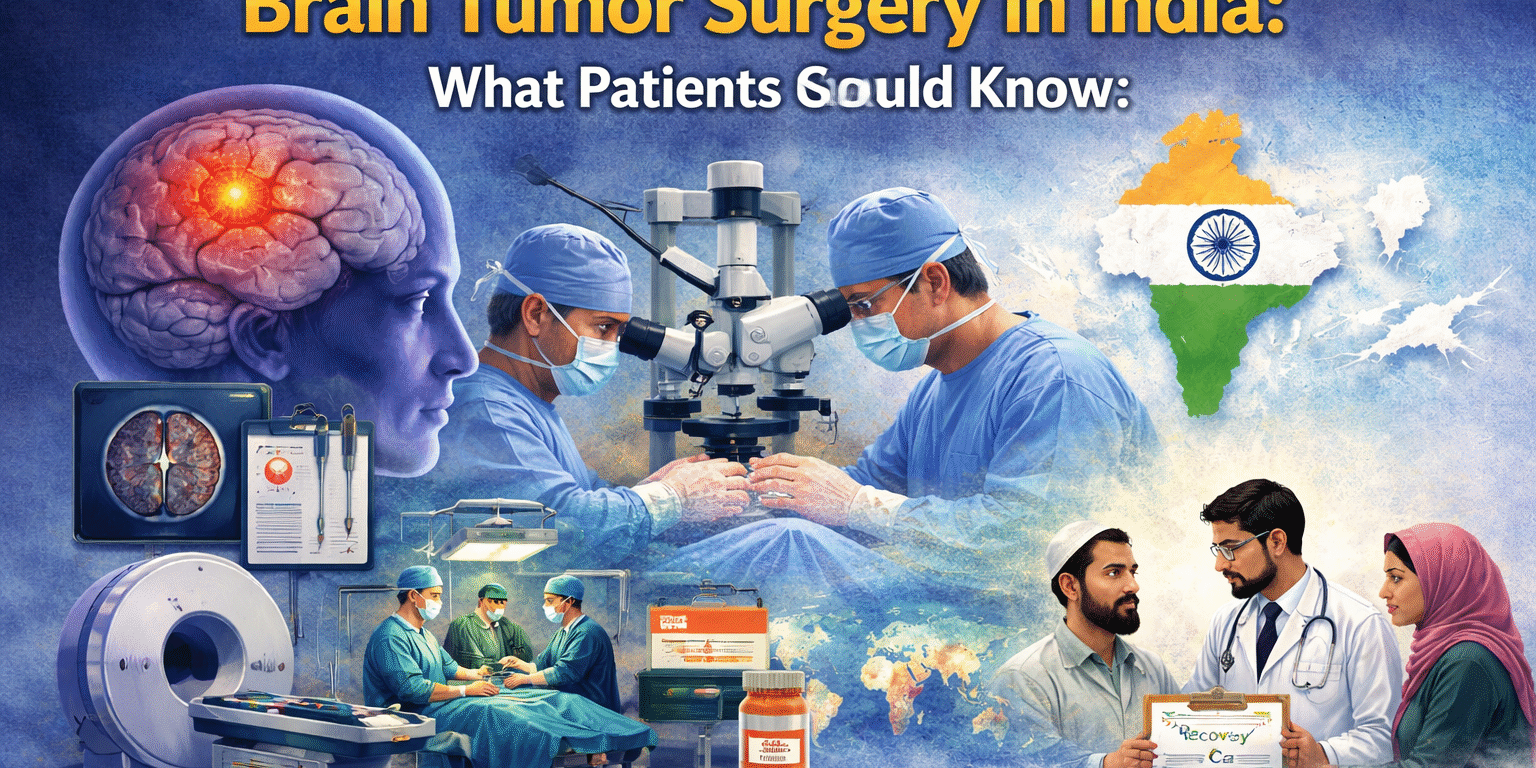
If you or a loved one is diagnosed with a brain tumor, brain tumor surgery in India offers advanced treatment, experienced neurosurgeons, and significantly lower medical costs.
Did you know? According to a report by PubMed Central, the incidence of central nervous system (CNS) tumors in India ranges from 5 to 10 per 100,000 population, with an increasing trend, and accounts for 2% of malignancies.
However, many Indian and foreign patients are still ignorant of the genuinely life-saving solutions that are accessible at home. India has been a popular worldwide destination for the treatment of brain tumors due to its highly skilled professionals, sophisticated neurosurgical procedures, and notably reduced costs. Here is everything you need to know before you decide.
Key Takeaways
- India offers world-class, reasonably priced, and easily accessible brain tumor surgery.
- India provides a range of brain tumor treatment options, including awake surgery and craniotomy.
- The cost of treating brain tumors in India is 60–80% less than in the United States or the United Kingdom.
- Researching experience, technology, and results is necessary while choosing the best neurosurgeon in India.
- Brain tumour surgery recovery takes weeks to months and often involves rehabilitation.
Understanding Brain Tumours and Why Timely Surgery Matters
An aberrant mass of cells is called a brain tumor. It develops within or near the brain. Malignant (cancerous) and benign (non-cancerous) tumors are both possible. Both kinds require emergency medical care.
Common symptoms include:
- Persistent headaches, especially in the morning
- Sudden convulsions or seizures
- Double or blurred vision
- Vomiting and nausea
- Speech, memory, or movement difficulties
Results can be significantly enhanced by prompt surgery and early diagnosis. Don’t disregard these warning signs.
Exploring Key Brain Tumour Treatment Options Available in India
Depending on the type, size, and location of the tumor, patients frequently have a variety of brain tumor treatment options. Here are the main approaches:
Surgical Resection: The Gold Standard for Accessible Tumours
The goal of surgery is to carefully remove as much of the tumor as feasible. A craniotomy, which involves temporarily removing a portion of the skull, is the most common treatment. Modern instruments like neuro-navigation and intraoperative MRI are now used by Indian surgeons.
Radiosurgery: Precision Treatment for Hard-to-Reach Areas
Focused radiation is delivered to the tumor using methods like CyberKnife and Gamma Knife. They spare the healthy tissue around them. These are ideal for small, deep-seated tumours.
Chemotherapy and Radiation: Post-Surgical Support Treatment
Oncologists frequently advise radiation, chemotherapy, or both after surgery. These treatments target residual tumour cells and prevent recurrence.
Awake Brain Surgery: Preserving Critical Brain Functions
The patient is cognizant throughout the procedure in an awake craniotomy. This helps surgeons in real-time speech and movement monitoring. Indian hospitals now successfully perform this highly specialised procedure.
Brain Tumor Treatment Cost in India vs Global Prices
Affordability is a major factor in patients’ decisions to travel to India. The brain tumor treatment cost in India is far less than in Western nations. Here are some estimated costs below:
| Surgery Type | Cost in India (INR) | |
| Craniotomy | ₹2,50,000 – ₹6,00,000 | |
| Stereotactic Radiosurgery | ₹1,50,000 – ₹4,00,000 | |
| Endoscopic Brain Surgery | ₹3,00,000 – ₹7,00,000 | |
| Awake Brain Surgery | ₹4,00,000 – ₹8,00,000 |
Note: Costs vary based on hospital tier, city, surgeon experience, and tumour complexity.
International patients frequently save 60–80% by choosing India, even after adding travel and accommodation.
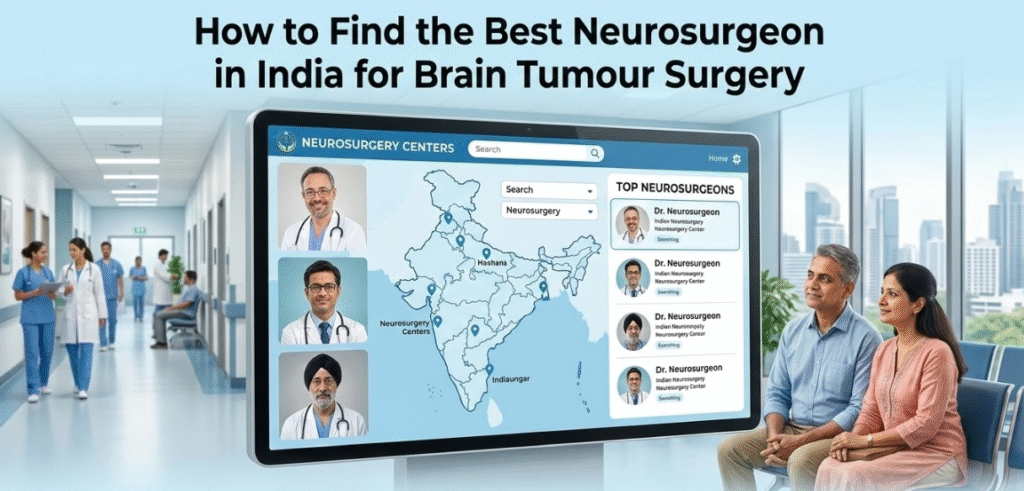
How to Find the Best Neurosurgeon in India for Brain Tumour Surgery
The most crucial choice you will make is choosing the appropriate specialist. The best neurosurgeon India has to offer will have the following qualities:
- Fellowship training in neurosurgery from a reputed institution
- More surgeries performed by surgeons with a high volume of experience yield better results.
- Access to advanced resources such as neuro-navigation and intraoperative MRI
- Transparent communication and a patient-centric approach
- Positive patient outcomes and verifiable success rates
Always ask your neurosurgeon about the specific technique recommended and why. Your queries will always be welcomed by a self-assured, skilled surgeon.
What to Expect During Brain Tumour Surgery Recovery
The brain tumor surgery recovery journey looks different for every patient. However, there are some general milestones you can expect:
Immediate Post-Surgery Phase: The First 48–72 Hours
The majority of patients stay in the intensive care unit for one to three days. The medical team keeps an eye out for neurological abnormalities, bleeding, and swelling.
Hospital Stay: Typically One to Two Weeks
After a craniotomy, patients often stay in the hospital for 7–14 days. Minimally invasive surgery may allow patients to return home sooner.
Rehabilitation: Rebuilding Strength and Cognitive Function
Discharge is not the end of recovery. An essential component of the recovery process is occupational treatment, speech therapy, and physical therapy.
Long-Term Outlook: Monitoring and Follow-Up
After surgery, regular MRI scans are crucial. They help in early recurrence detection. In six to twelve weeks, the majority of patients are able to resume their regular activities.
The patient’s age, general health, type of tumor, and extent of tumor removal are all factors that affect recovery.
Why Patients Across the World Choose India for Neurosurgery
India combines compassionate care with clinical excellence. The following are the most notable reasons:
- Prestigious medical facilities accredited by JCI and NABH
- Medical personnel who speak English to facilitate communication
- Cutting-edge technologies, such as AI-guided navigation and robotic surgery
- Shorter waiting times than in Canada or the UK
- Comprehensive aid for foreign patients, help with visas, lodging, and interpreters
Some of Asia’s best neurosurgical centers may be found in cities like Hyderabad, Mumbai, Chennai, and Delhi.
Ready to Take the Next Step Towards Expert Brain Tumour Care?
Don’t let uncertainty delay your treatment. The right hospital, the right doctor, and the proper information can offer proper brain tumor surgery in India and can make all the difference. With thorough diagnosis, surgery, and post-operative support all under one roof, Dr. Raveesh is a well-known name in the field, offering comprehensive diagnosis, surgery, and post-operative support under one roof.