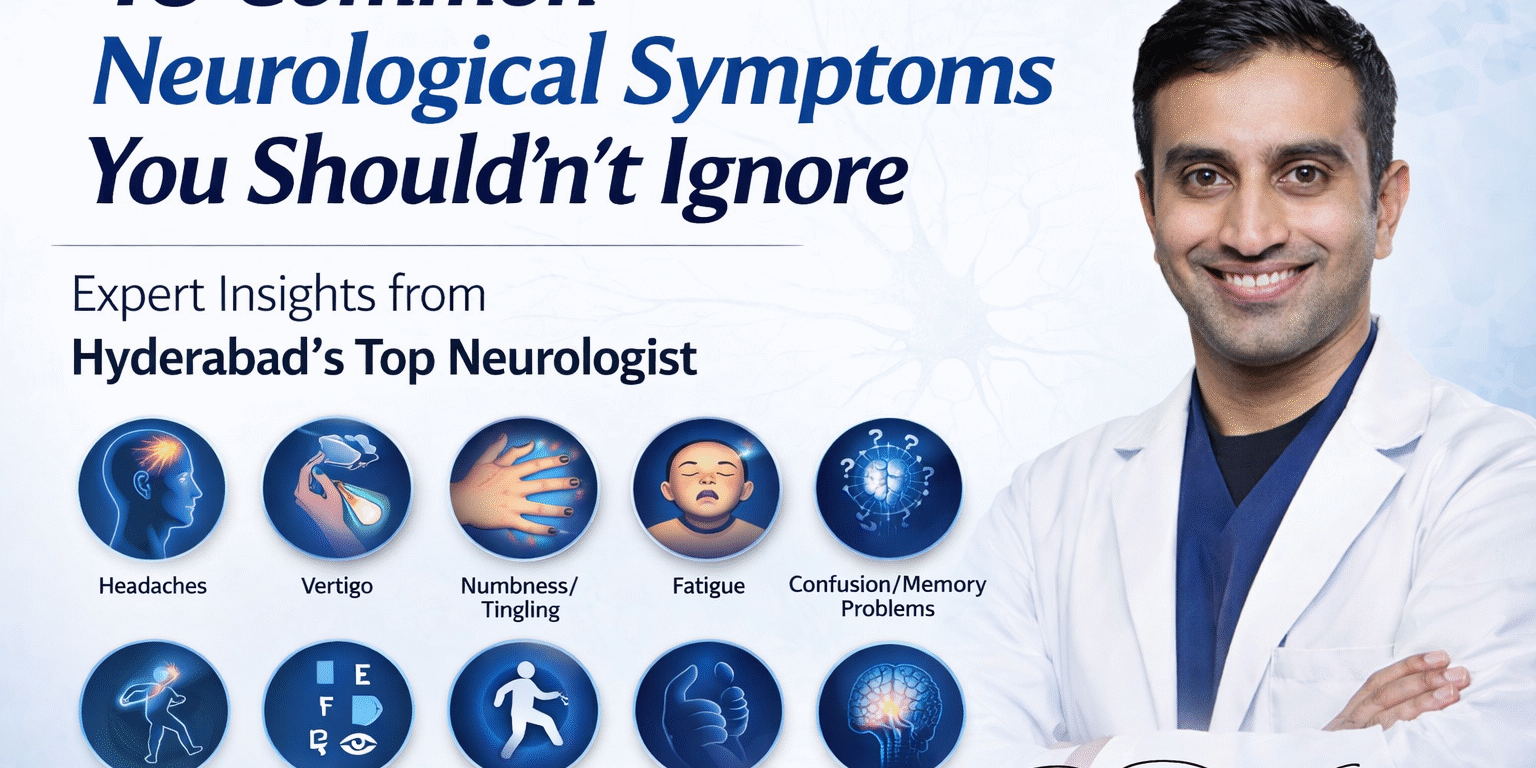
If you don’t pay attention to the signals your brain is giving you, it could hurt your health or even kill you. Read on to find out which warning signs demand your immediate attention.
Did you know? The World Health Organization (WHO) states that neurological diseases affect more than 40% of the world population. This makes them one of the biggest health problems in the world. Still, most people wait months before getting help, even though they know there are early signs. The result? Conditions that could have been treated early become harder to manage.
Dr. Raveesh Sunkara, a leading neurologist in Hyderabad, offers expert care for neurological issues. In this blog, you will understand the top 10 common neurological symptoms you shouldn’t ignore. So, read until the end!
Key Takeaways
- Emergencies include a sudden, strong headache, weakness on one side, or speech difficulty. When someone is having a stroke, every minute counts.
- It’s easy to ignore tremors, personality changes, memory loss, and problems with balance, but they can indicate serious neurological conditions in early stages.
- When brain conditions like Parkinson’s, epilepsy, and multiple sclerosis are found early and treated quickly, they are much easier to deal with.
- People often get the wrong diagnosis for vision changes, back pain with tingling, and changes in behavior. A specialist’s opinion is needed to make a correct conclusion.
- Searching for symptoms online can make you feel scared or reassured when you don’t need to be. Trust the expert Hyderabad neurological advice and consult a qualified professional.
Warning Signs That Tell You It’s Time to See a Neurologist in Hyderabad
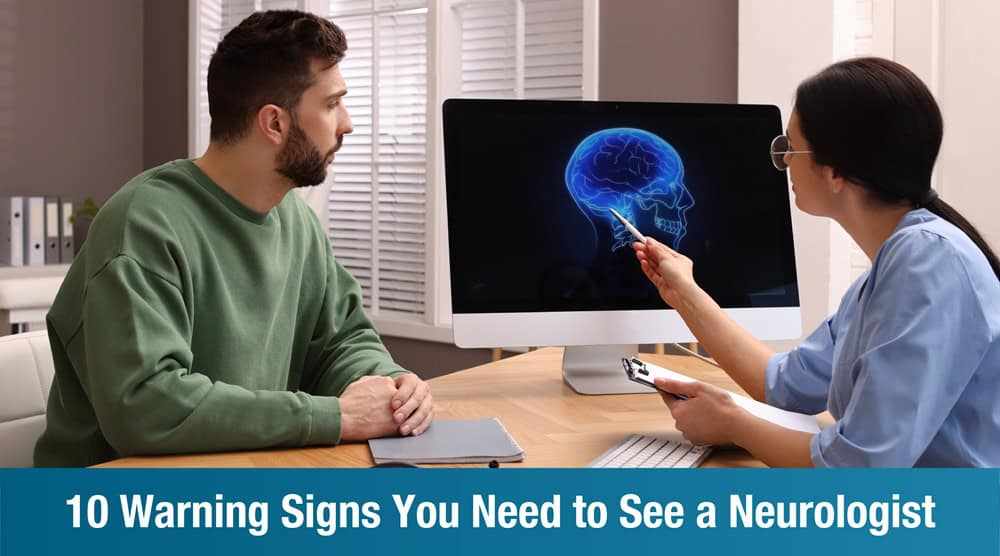
Before you start, you should know that not all headaches and drops in blood pressure are emergencies. But certain patterns and combinations of neurological symptoms are serious red flags. Let’s break them down one by one.
1. Sudden, Severe Headaches That Feel Different
A headache that comes on quickly and is the “worst pain of your life” is a medical emergency. This kind of headache can signal a brain aneurysm or subarachnoid hemorrhage.
Do not wait. Seek emergency care immediately.
You should also pay attention to headaches that get worse over time. They might mean that there is more pressure inside the skull.
2. Unexplained Weakness or Numbness in Limbs
Having sudden weakness in one arm, leg, or side of the body is a classic stroke warning sign. It’s also scary when you feel numb without being hurt.
Key red flag: If the weakness comes out of the blue and only affects one side, call emergency services without delay.
For this condition, knowing when to see a neurologist can mean the difference between getting better and being unable to work again for good.
3. Frequent Dizziness and Loss of Balance
It’s normal to feel dizzy sometimes after getting up too quickly. But feeling dizzy, spinning (vertigo), or losing your balance while walking over and over again is a completely different issue.
These symptoms may indicate:
- Inner ear disorders linked to the brain
- Problems with the cerebellum
- Early signs of multiple sclerosis
- Transient ischaemic attacks (mini-strokes)
If you have persistent balance issues, you should always get a neurological evaluation.
4. Sudden Vision Changes
People usually don’t think much of blurred or double vision, or rapid loss of vision in one or both eyes, because they think it’s just “eye strain.”
In fact, these changes can signal:
- Optic neuritis (common in MS)
- A stroke in the visual cortex.
- Brain tumour pressure on the optic nerves
If your vision changes quickly or for no reason, you should take a Hyderabad neurologist’s advice as early as possible.
5. Recurring Seizures or Unexplained Blackouts
A seizure is always a neurological event, even if it only causes shaking or looking blankly for a short time. Even a single seizure requires evaluation.
A lot of people with epilepsy don’t know they have it for years because their seizures are so mild. This also includes blackouts that you can’t explain, short memory breaks, and sudden falls.
6. Memory Loss and Cognitive Decline
It’s normal to forget a name every once in a while. But forgetting recent talks, getting lost in places you know, or having trouble with everyday tasks is a serious concern.
In India, this is one of the neurological signs that people tend to ignore the most. This could mean that someone has Alzheimer’s disease, vascular dementia, or another neurological disorder. The tricky part? They all begin very subtly and worsen slowly over time.
7. Slurred Speech or Difficulty Finding Words
A stroke emergency is sudden slurred speech or not being able to make or understand words. Take the FAST test:
- F – Face drooping
- A – Arm weakness
- S – Speech difficulty
- T – Time to call emergency services
Do not ignore signs, even if they go away in a few minutes. A transient ischaemic attack (TIA) is a warning stroke and must be evaluated urgently.
8. Persistent Tremors or Involuntary Movements
The occasional handshake after too much coffee is harmless. But tremors that occur at rest affect daily activities, or worsen over time, are a different story.
These can point to:
- Parkinson’s disease (early stages)
- Essential tremor
- Dystonia
- Drug-induced movement disorders
Early identification of Parkinson’s disease leads to better care and a higher quality of life. This is a great example of how important it is to know when to see a doctor.
9. Chronic or Worsening Neck and Back Pain with Neurological Features
A lot of people have back and neck pain. But if you have pain along with any of the following, you need help right away:
- Tingling or numbness running down the arms or legs
- Weakness in the hands or feet
- Loss of bladder or bowel control
- Pain that wakes you from sleep
These signs point to nerve compression that could get worse if not treated quickly. A skilled neurologist in Hyderabad can figure out what’s wrong and suggest the best way to treat it.
10. Sudden Changes in Behaviour or Personality
A lot of families are surprised by this sign. “He just isn’t himself anymore.” Neurological problems can cause sudden anger, irritability, social withdrawal, or big changes in behavior.
Changes in behavior can be caused by things like frontotemporal dementia, brain tumors, autoimmune encephalitis, and even serious infections. People often mistake these for mental or stress-related problems.
If someone you care about has sudden, strange changes in behavior, you should see a neurologist instead of just a psychiatrist.
When to See a Neurologist: A Quick Reference Guide
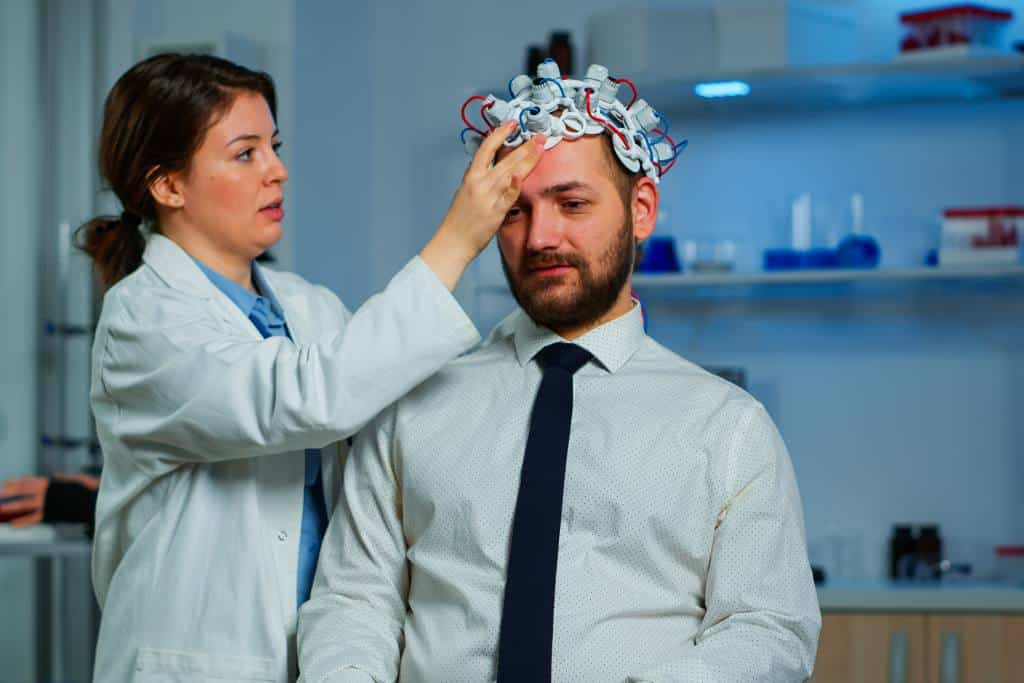
Here’s a quick list to help you figure out when you need a professional evaluation:
- If you suddenly have a terrible headache, weakness on one side, trouble speaking, vision loss, or seizures, call 911 right away.
- Make an appointment right away if you have frequent dizziness, memory loss, shaking, or problems with your balance.
- Schedule a consultation for chronic back/neck pain with nerve symptoms, personality changes, or worsening headaches
Don’t Wait Until It’s Too Late, Book Your Consultation Today!
For the health of your brain, you shouldn’t “wait and watch.” If you or someone you care about has any of the above signs, the best thing you can do is act quickly.
You can find out more about expert nerve care in Hyderabad by visiting our website. Dr. Raveesh Sunkara and his dedicated team are committed to providing patients with complex neurological conditions. Book your session today to take the first step toward a healthier brain. Book your appointment and get the clarity you deserve.