Millions of people around the world have neurological disorders that mess up the brain, spinal cord, and nerves that control everything we do.
According to the World Health Organisation, more than a billion people around the world have some kind of brain disease. This shocking number shows how common these conditions have become. Neurological problems can show up in a lot of different ways, such as a headache that won’t go away, tremors that you can’t explain, or memory loss. Understanding these conditions is the first thing that needs to be treated, and handling them well.

Key Takeaways
- Over a billion people around the world have neurological issues, making them one of the most common health problems.
- Early awareness of symptoms can save lives. Headaches that won’t go away, numbness, and memory problems need to be treated right away by a doctor.
- Multiple sclerosis, Alzheimer’s, epilepsy, Parkinson’s, and stroke are all common neurological diseases.
- For a correct diagnosis, multiple tests are needed, such as MRI scans, blood work, and neurological exams.
- By making healthy living choices, you can greatly lower your chances of getting many nerve and brain conditions.
What Are Neurological Problems?
The diseases that affect the nervous system are called nerve disorders. This includes the nerves in the brain, spinal cord, and body’s edges. These nerve system diseases can be very mild or very dangerous to your life. They mess up the way the body and mind normally work.
Illnesses that affect the nervous system cover a wide range of conditions. Some conditions are caused by genes, while others are brought on by bad habits or accidents.
Most Common Neurological Disorders List
In all age groups, these are the most common neurological disorders that people have:
Stroke
If the brain stops getting blood, this is called a stroke. This kills brain cells. Some of the symptoms are rapid numbness, confusion, and speaking problems. Getting medical help right away can save lives.
Alzheimer’s Disease
This disease gets worse over time and makes it harder to remember things and think clearly. It’s one of the most common brain diseases in older people. Early signs include forgetting recent talks and losing things a lot.
Epilepsy
Epilepsy is characterised by repeated seizures that are caused by abnormal brain electrical activity. Seizures can be anything from a short loss of consciousness to serious shaking. Most people with this nerve disorder can easily manage it with medication.
Parkinson’s Disease
This neuroproblem makes it hard to control your movements. Patients have trembling, stiffness, and trouble keeping their balance. Over time, the situation slowly gets worse.
Migraine
People often think of migraines as “just a headache,” but they are actually very dangerous neurological conditions examples. They hurt very badly, and people who have them often feel sick and are sensitive to light.
Multiple Sclerosis
MS is an autoimmune disease, which means that the body attacks the covers of nerves. This makes it hard for the brain and body to talk to each other. Symptoms are very different for each patient.
Understanding Neurological Disorders Symptoms
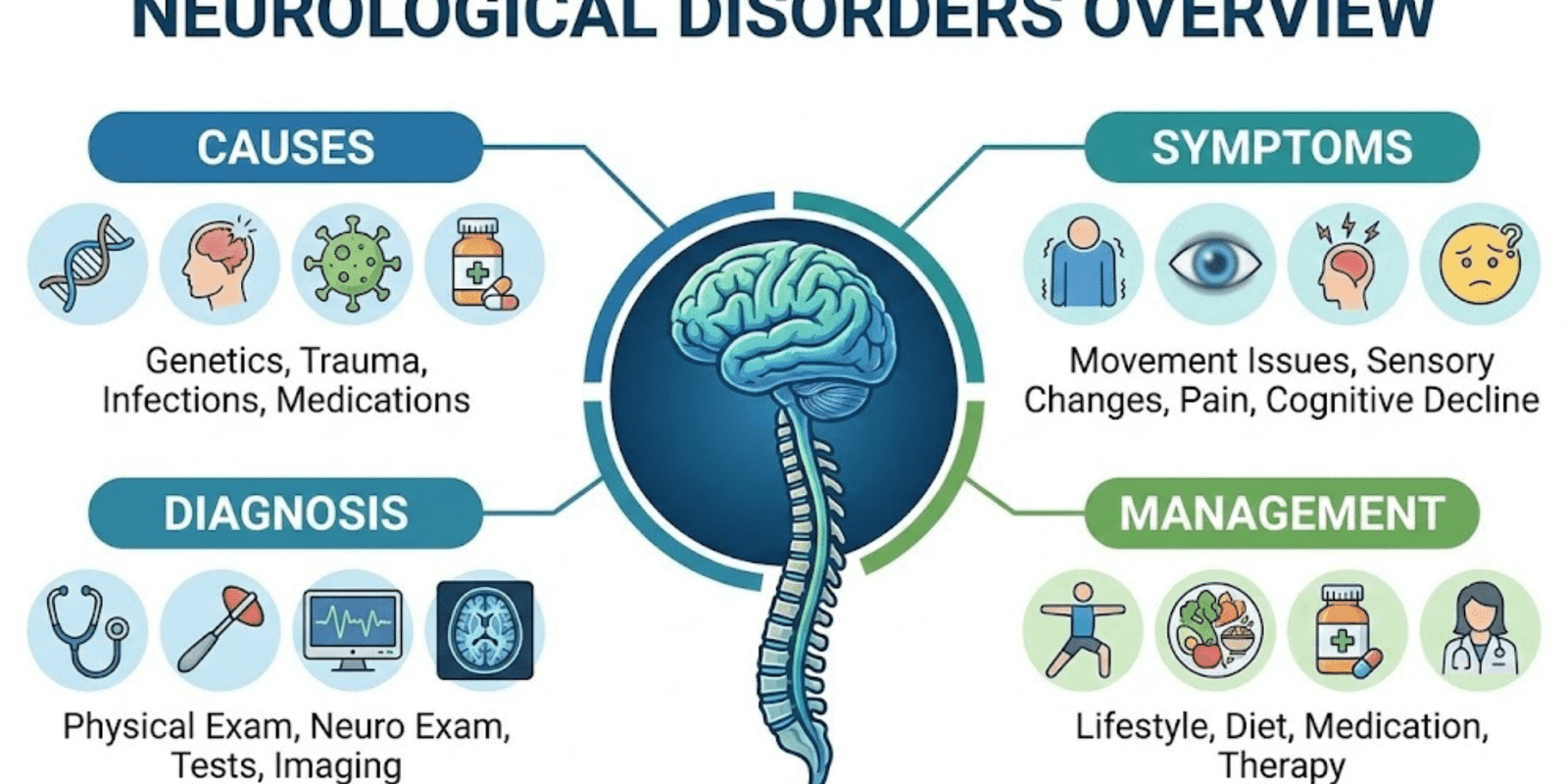
Depending on which part of the nervous system is hurt, neurological disorder symptoms are different. But there are some red flags that you should never ignore:
- Persistent or sudden severe headaches
- Numbness or tingling in limbs
- Muscle weakness or paralysis
- Memory problems or confusion
- Vision changes or loss
- Difficulty speaking or understanding speech
- Seizures or tremors
- Loss of coordination
- Unexplained dizziness
Early detection of brain problems can significantly improve treatment outcomes.
Common Causes Behind Nerve Diseases
Understanding what causes these brain issues can help with their avoidance and management:
- Genetics: A lot of nerve diseases run in families. Genetic changes can make people more likely to get diseases like Huntington’s.
- Sores and infections: Both bacterial and viral illnesses can hurt the nervous system. Meningitis and encephalitis are two very good examples.
- Trauma: Accidental head injuries can lead to long-term brain diseases. Even minor concussions need to be checked out by a doctor.
- Autoimmune Conditions: Sometimes, the immune system of the body targets healthy nerve tissue that is healthy. This group includes people with multiple sclerosis.
- Lifestyle Factors: A bad diet, not getting enough exercise, and abusing drugs all raise the risk. Diabetes and high blood pressure also play a big role.
- Environmental Toxins: Heavy metals and chemicals can hurt nerves if they get into the body. In some cases, dangers at work play a part.
How Doctors Diagnose Neurological Conditions
Accurate diagnosis requires a comprehensive approach:
| Diagnostic Method | Purpose |
| Neurological Examination | Tests reflexes, coordination, and sensory function |
| MRI/CT Scans | Creates detailed brain and spine images |
| EEG (Electroencephalogram) | Measures electrical brain activity |
| Blood Tests | Identifies infections and metabolic issues |
| Lumbar Puncture | Analyses cerebrospinal fluid |
| EMG (Electromyography) | Evaluates muscle and nerve function |
The diagnosis process might seem like a lot to handle. However, these tests give doctors important information that they need to plan effective care.
Living with Neurological Disorders
Taking care of neurological disorders needs more than one method. Medication, physical training, and changes to one’s lifestyle are often part of treatment plans. Support groups help people deal with their feelings and give them useful tips.
Take charge of your brain health right now! Getting regular checkups and making healthy choices every day make a big difference.
Take Control of Your Neurological Health Today!
Understanding “what are neurological problems” gives you the power to spot early signs and get the right care. The complexity of these conditions means that they need to be evaluated by professionals and treated in a way that is unique to each person.
Do not wait if you are having any signs that worry you. Talk to a skilled neurologist like Dr. Raveesh Sunkara to get a full evaluation. Don’t forget to visit our website for expert advice and specialized nerve care. The quality of your life depends on how healthy your brain is. Put it on the same level of importance as other parts of your health.
FAQs
1. Which of the following is the most common brain disorder?
Most people who have nerve problems have headaches or migraines. Alzheimer’s disease and stroke come next. Every year, these diseases affect millions of people around the world.
2. Is it possible to fix neurological disorders?
Some neurological diseases can be cured, while others are treated so that they don’t get worse. Antibiotics might be able to treat infections. But diseases that get worse over time, like Parkinson’s, need to be managed over time.
3. What age does brain damage begin?
Anyone of any age can start having neurological problems. Some problems are present from birth and can’t be fixed. Some, like Alzheimer’s, tend to affect older people. Migraines often start when a person is a young adult.
4. Do neurological diseases run in the family?
A lot of neurological problems are linked to genes. A family background of Alzheimer’s, Huntington’s, or some types of epilepsy makes the chance of getting them higher. Genetics alone, though, doesn’t tell you if you’ll get these conditions.
5. What can I do to avoid getting brain diseases?
Stay healthy by working out regularly and eating a varied diet. Keep your blood sugar and blood pressure under control. Don’t smoke and don’t drink too much alcohol. When doing things that could hurt your head, wear safety gear.