What neurosurgeons do might really surprise you. They use cutting-edge surgical and non-surgical methods to treat brain and spine problems that can change people’s lives.
Did you know? According to a report by The Lancet, globally, around 50 million people have epilepsy, among whom 10–12 million live in India. Brain surgeons are the ones who can help when these types of problems get really bad. From getting rid of brain tumors to fixing problems with the spine, what they do is truly amazing.
Knowing what a neurosurgeon doctor does can help you make smart choices. If you or someone you care about has a complicated neurological condition. India has some of the best clinics for this kind of care.
Key Takeaways
- Neurosurgeons treat the entire nervous system: brain, spine, and nerves, with both surgical and non-surgical means.
- Early identification with MRI, CT scans, and neurological exams is critical for successful treatment outcomes.
- Brain surgery is safer and more successful now that there are more advanced techniques like awake craniotomy, DBS surgery, and endoscopic spine surgery.
- For kids in Hyderabad who have special neurological conditions that affect their growth, a pediatric neurosurgeon can help.
- With minimally invasive techniques, people with many complicated diseases can now get better faster, with less pain, and in less time in the hospital.
What Does a Neurosurgeon Doctor Actually Do?
Brain surgery isn’t the only thing a neurosurgeon doctor does. They take care of the brain, spinal cord, and peripheral nerves.
Their work covers both surgery and non-surgical treatment. They assess, make plans, carry out, and manage recovery. Every case is unique, and so is every treatment plan.
Conditions Treated by a Neurosurgeon
| Condition | Type | Treatment Approach |
| Brain Tumour | Brain | Surgery, Radiosurgery |
| Brain Aneurysm | Vascular | Clipping, Coiling |
| Slip Disc | Spine | Endoscopic Surgery |
| Epilepsy | Brain | Epilepsy Surgery |
| Scoliosis | Spine | Corrective Surgery |
| Brain Stroke | Vascular | Emergency Intervention |
| Parkinson’s Disease | Brain | DBS Surgery |
| Trigeminal Neuralgia | Nerve | Microsurgery |
| Spinal Tuberculosis | Spine | Medical and Surgical |
| Hydrocephalus (Children) | Brain | Shunt Surgery |
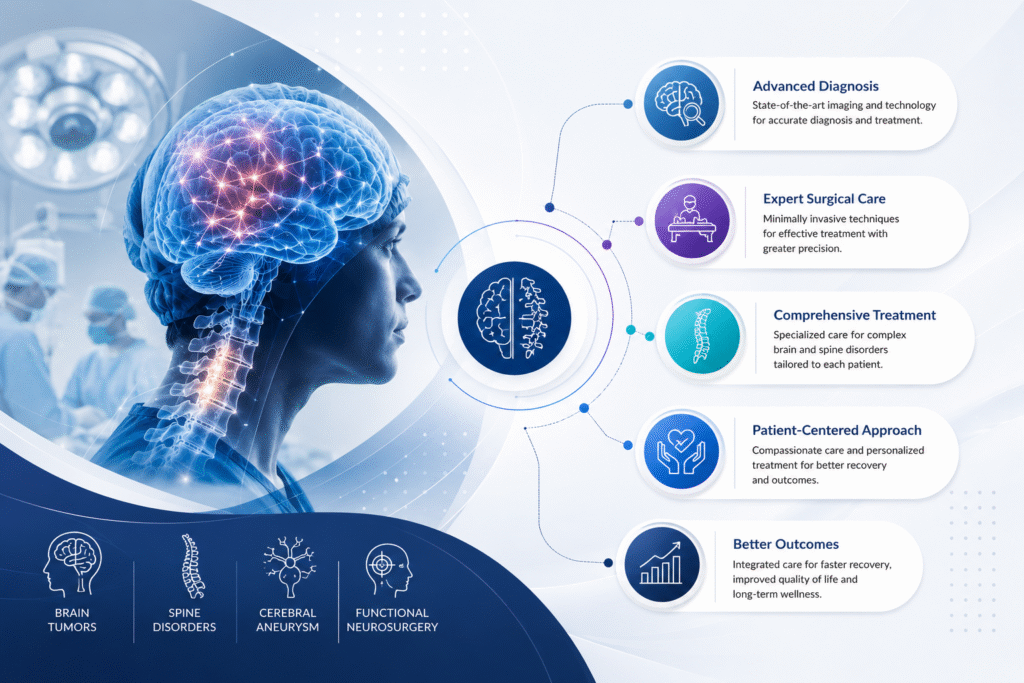
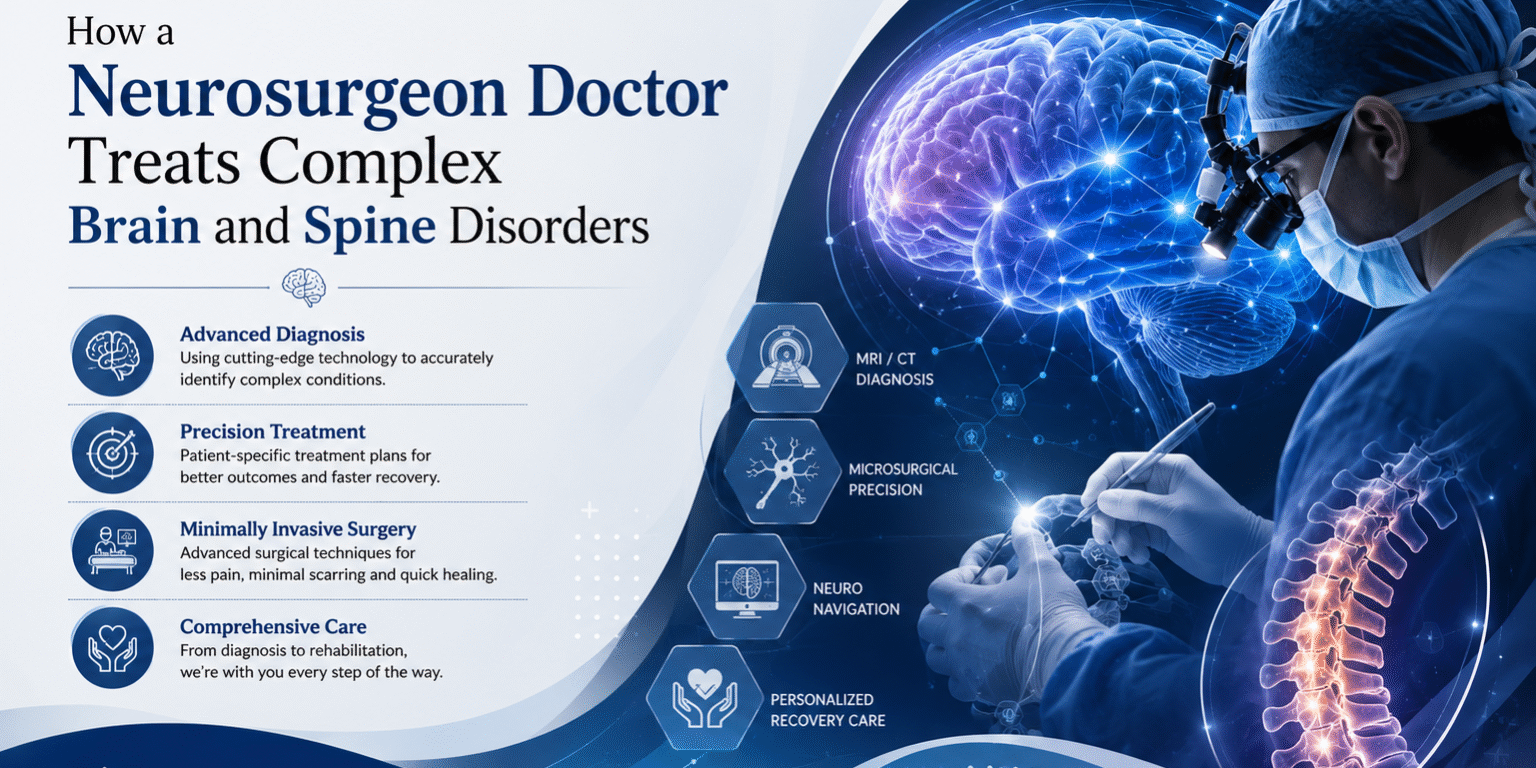
How a Brain Neurosurgeon Diagnoses Complex Disorders
Before they do any surgery, brain neurosurgeons begin with a thorough evaluation. This includes:
- A neurological examination to check reflexes, coordination, and cognition.
- MRI and CT scans show the brain and spine in more detail.
- Angiography for problems with blood vessels, such as aneurysms
- Electroencephalogram (EEG) for epilepsy assessment
- Biopsy when a tumour is suspected
A correct diagnosis is the first step for effective care. The more precise the diagnosis, the better the surgical outcome.
Life-Saving Treatments Performed by a Neurosurgeon Doctor
1. Brain Tumour Surgery
A brain neurosurgeon carefully removes tumours while protecting healthy brain tissues. These days, techniques like awake craniotomy and neuro-navigation make this safer than ever before.
2. Brain Aneurysm and AVM Treatment
A brain tumour that hasn’t burst is like a ticking time bomb. To stop the aneurysm from bursting, neurosurgeons either clip it surgically or coil it inside the blood vessel.
3. Epilepsy Surgery
When medicines fail to control seizures, surgery becomes an option. A neurosurgeon identifies the brain tissue that is causing the seizure and removes it. This can greatly reduce or eliminate seizures.
4. Deep Brain Stimulation (DBS) Surgery
People with Parkinson’s disease and other movement problems can benefit from DBS surgery. Deep in the brain, the surgeon implants electrodes deep in the brain. These electrodes send electrical impulses to control abnormal signals.
It is one of the most transformative procedures in modern neurosurgery.
5. Spine Surgery for Complex Disorders
Spine surgery is required for problems like scoliosis, spinal cancer, and slip discs. Endoscopic spine surgery is a method that causes the least amount of damage. It means less pain, smaller cuts, and faster recovery.
The Critical Role of a Pediatric Neurosurgeon in Hyderabad
Children are not small adults. Their brains and nervous systems are still developing. This makes paediatric neurological conditions unique and complex.
A pediatric neurosurgeon in Hyderabad treats conditions like:
- Hydrocephalus (excess fluid in the brain)
- Brain tumours in children
- Spina bifida (spine development defect)
- Craniosynostosis (premature skull fusion)
- Epilepsy in children
- Autism and related neurological conditions
Children deserve specialized care from a surgeon who truly understands their developing nervous systems.
Why Choose a Specialist Paediatric Neurosurgeon?
A pediatric neurosurgeon uses child-specific surgical techniques and smaller instruments. They work together with neurologists and pediatric anesthesiologists. This team method ensures the safest possible outcomes for your child.
What Makes the Best Brain Specialist Doctor in Hyderabad Stand Out?
It is very important to find the right brain specialist doctor in Hyderabad. Here is what to look for:
- Years of experience in complex neurosurgery
- Getting more training in subspecialties like pediatric, vascular, or spine neurosurgery
- Access to modern tools like neuro-navigation, intraoperative MRI, and endoscope are available.
- Support from a multidisciplinary team of neurologists, doctors, and physiotherapists
- High success rates and patient testimonials
- Clear communication and a compassionate approach
A skilled brain specialist doctor in Hyderabad combines technical excellence with genuine patient care. That combination makes all the difference.
Minimally Invasive Neurosurgery: The Game Changer
Neurosurgery has changed a lot in recent years. Today, many complicated surgeries are done through tiny incisions.
Benefits of minimally invasive neurosurgery include:
- Less blood loss during surgery
- Reduced risk of infection
- Shorter hospital stay
- Faster return to daily activities
- Minimal scarring
Endoscopic spine surgery is a prime example. Through a small cut, the doctor uses a camera and very small tools. Patients often go home within 24-48 hours.
Recovery: What to Expect After Neurosurgery
Recovery depends on the type of surgery and the patient’s overall health. Here is a general timeline:
- Day 1–3: Monitoring in the ICU or neurosurgery ward
- Day 3–7: Gradual movement, basic physiotherapy begins
- Week 2–4: Return home, follow-up visits, medicines
- Month 1–3: Physiotherapy, neurological rehabilitation
- Months 3–6: Most patients return to normal activities
To fully heal, you need to be patient and keep up with your rehabilitation.

Take Control of Your Brain and Spine Health!
Your brain and spine are the command centres of your body. Never ignore neurological symptoms. Early consultation with a neurosurgeon doctor can prevent irreversible damage.
If you want world-class treatment backed by years of experience and the latest technology, Dr Raveesh offers comprehensive neurosurgical care, from advanced pediatric neurosurgery and spine treatments to surgery for brain tumors. Book your consultation today and take the most important step towards a healthier life.